UN Weather Agency Warns That Fire Smoke and Heat-Driven Pollution Are Outpacing Global Air-Quality Gains
Bdbusinessdaily.com – The World Meteorological Organization released its latest annual Air Quality and Climate Bulletin on 7 September, delivering a stark assessment: the microscopic pollutants released by intensifying wildfires and prolonged heatwaves are eroding decades of progress made to clean the air in industrialized regions. The agency, which serves as the United Nations’ body for weather and climate science, framed the issue as inseparable from climate change itself, noting that scientists attribute the rising frequency and severity of both heat extremes and large-scale fires to a warming planet.
Smoke That Travels Far and Kills Quietly
At the heart of the bulletin is particulate matter known as PM2.5 — particles and liquid droplets smaller than 2.5 micrometres across. Because of their minute size, these particles bypass the body’s natural filtration, lodging deep in lung tissue and entering the bloodstream. They originate from fossil-fuel combustion, agricultural burning, household heating, vehicle exhaust, dust storms, and, increasingly, from wildfires.
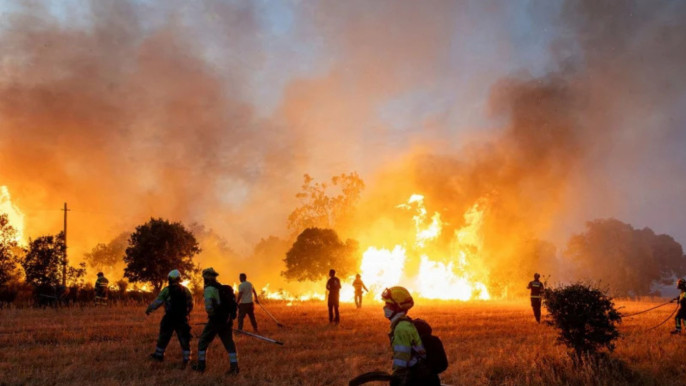
The WMO highlighted a troubling asymmetry: while regulatory frameworks across Europe and North America have successfully curtailed industrial and transport-related PM2.5, human exposure to fire-derived PM2.5 has climbed. The agency pointed to the elevated toxicity of wildfire smoke compared with other emission sources, including automobile exhaust.
“Extreme wildfires are increasing, leading to significant health consequences because of the high toxicity of smoke,” the WMO stated in a statement accompanying its bulletin. “Whilst regulations in Europe and North America have reduced industrial and transport PM2.5 emissions, exposure to fire-related PM2.5 has increased.”
The implications for public-health modelling are significant. The agency cautioned that conventional risk models, which rely on aggregate PM2.5 concentration figures, may underestimate wildfire-attributable mortality by as much as 93 percent. One study referenced in the bulletin found that extreme fire-smoke events have roughly tripled worldwide since the 1990s, contributing to nearly 100,000 additional deaths per year between 2010 and 2018 — a figure the authors themselves flagged as likely an underestimate.
A Scientist’s Perspective on Undercounted Danger
Lorenzo Labrador, a researcher within the WMO’s Global Atmosphere Watch network, emphasized to AFP that air quality and climate change cannot be managed as separate policy tracks.
“Air quality and climate change can’t be dealt with separately. If one worsens, the other does too,” Labrador said. “In places where there are relatively powerful forest fires, we find a lot of fine particle pollution.”
He stressed that microparticles produced by burning vegetation are “much more toxic” than those from other sources, even car exhaust. Because wind carries these particles hundreds or thousands of kilometres from the fire origin, communities far removed from any active blaze still face elevated health risks. Yet, Labrador noted, the poisonous character of wildfire-specific particulates is not adequately factored into existing air-quality assessments.
Ground-Level Ozone: A Heatwave Amplifier
Beyond particulates, the bulletin flagged ground-level ozone as a rapidly escalating threat. Ozone at the surface builds when temperatures spike, atmospheric circulation stalls, and solar radiation intensifies — conditions that became all too familiar during the recent heatwaves sweeping China, southern Europe, and the southeastern United States. The WMO warned that the resulting surge in ozone exposure carries the potential to trigger tens of thousands of additional premature deaths, particularly through respiratory illness.
For readers unfamiliar with the distinction: unlike the protective ozone layer high in the stratosphere, ground-level ozone is a secondary pollutant formed by chemical reactions between nitrogen oxides and volatile organic compounds under sunlight. It irritates airways, worsens asthma, and accelerates cardiovascular stress, making heatwave episodes doubly dangerous.
Black Carbon, Microplastics, and the Long-Range Aerosol Problem
The report also drew attention to aerosol particles — including black carbon (soot) and microplastics — that migrate across continents and oceans, altering how the atmosphere reflects sunlight, modifying the chemistry of land and water surfaces, and contaminating environments previously considered pristine.
One mechanism described involves soot settling on snow and ice, darkening those surfaces and reducing their reflectivity, thereby accelerating melt. Another involves microplastics, generated when larger plastic items degrade under ultraviolet exposure and mechanical stress. These fragments are now detected in virtually every environmental compartment: air, soil, freshwater, and marine systems.
A simulation cited in the bulletin estimates roughly 51 million tonnes of plastic on land and 22 million tonnes in the ocean, both serving as reservoirs that shed microplastics into the atmosphere. The WMO called for intensified monitoring of the airborne pathways that transport these fragments from their sources to remote deposition zones, describing such surveillance as “crucial” as long as plastic production and mismanaged waste continue to grow.
The Policy Imperative: Coordinated Action
The bulletin’s central policy message is that air-quality regulation and climate mitigation must advance in tandem. The agency argued that pollutants such as aerosols, fine particles, and ground-level ozone remain insufficiently monitored despite their ubiquity and documented ecological harm.
“(We need) complementary and coordinated policies on air quality and climate because they cannot be dealt with in isolation,” the WMO stated.
For governments, the message carries practical weight: tightening industrial emission standards alone will not protect populations if wildfire smoke and heat-driven ozone continue to escalate. Conversely, aggressive climate mitigation without parallel air-quality investment leaves communities exposed to the very pollutants that climate change amplifies. The WMO’s framing positions the two challenges as mutually reinforcing — each failure compounds the other — and urges national and regional authorities to integrate monitoring networks, health-surveillance systems, and regulatory frameworks accordingly.
Related Reading
Frequently Asked Questions
What is Wildfires heatwaves endanger air quality health?
Wildfires heatwaves endanger air quality health is the main topic of this guide. The article explains the context, practical details, and next steps readers should understand.
Why does Wildfires heatwaves endanger air quality health matter?
Wildfires heatwaves endanger air quality health matters because readers are looking for a useful answer, not just a short summary. Good content should match search intent and help them decide what to do next.