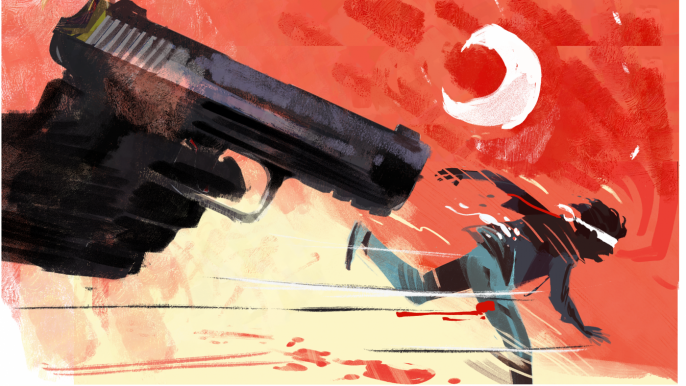
Police Chief’s ‘Crossfire’ Comment Reopens a Painful Question of Law and Power
Bdbusinessdaily.com – Bangladesh’s long and troubled association with the word “crossfire” made the Inspector General of Police’s recent comments impossible to treat as casual language. When Md Ali Hossain Fakir said on 26 October that police would proceed with “crossfire” if it was necessary and authorised by the government, the reaction was immediate because the term carries a history far beyond an ordinary exchange of shots.
For more than two decades, “crossfire” and later “gunfight” have appeared repeatedly in official accounts of deaths involving law-enforcement agencies. The typical account followed a recognisable sequence: a person already in custody was taken out, often at night, for an alleged weapons recovery or to locate suspected associates. Police said accomplices then attacked, officers fired back, and the detained person died. Authorities frequently recorded the recovery of firearms, ammunition or, in narcotics cases, drugs. Officers generally emerged unharmed or with limited injuries.
In these cases, the person killed was often publicly labelled a criminal, militant or drug trader before any court had ruled on the accusations. That pattern is central to why the phrase has become so politically and morally charged. It is not merely a description of force used during an unexpected armed confrontation; it has been connected in public memory to allegations of punishment without trial.
A record measured in thousands of deaths
The scale of the issue is reflected in data compiled by Ain o Salish Kendra. Between 2004 and September 2026, 2,957 people were killed in alleged crossfire incidents or gunfights involving law-enforcement agencies. Police were linked to 1,371 of those deaths, roughly 46% of the total. The Rapid Action Battalion, now known as the Special Response Battalion, accounted for another 1,200 deaths, while joint police-RAB operations accounted for 69.
The figures also challenge the idea that the concern belongs only to one force. From 2019 to 2021, police units, including the Detective Branch, were involved in 48.05% of alleged extrajudicial killings reviewed by the Centre for Governance Studies. RAB’s share in that period was 31.9%.
By 2021, allegations involving extrajudicial killings, enforced disappearances and torture had brought RAB into an international human-rights crisis. The United States imposed sanctions on the force and several officials. For families of victims, rights advocates and many citizens, “crossfire” therefore recalls claims of institutional violence carried out by personnel empowered by the state.
What the IGP said, and why it mattered
At an event in Chawkbazar, Fakir spoke about the restrictions that police face in performing their duties. He said officers were responsible for applying the Constitution and the law whenever needed, then added that they would act if crossfire became necessary and the government permitted it.
“Our responsibility is to apply the law and the Constitution wherever and whenever necessary. If a crossfire is necessary, and the government allows it, we will proceed accordingly.”
The wording drew condemnation because state approval cannot turn an unlawful killing into a lawful one. Transparency International Bangladesh called for the IGP to retract the remark, issue an unconditional apology and leave office until accountability was addressed. Ain o Salish Kendra said the statement conflicted with constitutional rights and the rule of law. The Human Rights Support Society asked the government to clarify whether he had stated official policy or a personal opinion.
The government later moved to distance itself from the comment. Prime Minister’s Information and Broadcasting Adviser Dr Zahed Ur Rahman said the government did not endorse extrajudicial killing in any form, and noted that the IGP had stepped back from his statement. He said the prime minister would decide on the matter after returning to the country.
“The government does not support extrajudicial killings in any form. The IGP has already backtracked on his statement. The prime minister will decide on the matter after returning to the country.”
Constitutional safeguards cannot be suspended by permission
TIB Executive Director Iftekharuzzaman pointed to the fundamental flaw in suggesting that executive consent could validate such action. Articles 31 and 32 of the Constitution protect legal safeguards as well as life and personal liberty. Those protections do not disappear because a government, police officer or other executive authority decides that a suspect is dangerous.
“No government approval can legitimise an extrajudicial killing. The rights to legal protection and to life and personal liberty guaranteed under Articles 31 and 32 of the Constitution cannot be set aside by executive decisions,” Iftekharuzzaman said.
Police may use force when it is genuinely necessary and proportionate to protect life. Sections 96 to 106 of the Penal Code recognise private defence in defined circumstances. But self-defence addresses an immediate danger. It cannot serve as a pre-authorisation to remove a detainee from custody and impose a fatal punishment outside a courtroom.
Even someone accused of a grave crime retains legal rights. The obligation of the state is to investigate, arrest where justified, present evidence and allow a court to decide guilt or innocence. Armed officers cannot be given authority to replace the judiciary.
Literal meaning or metaphorical meaning?
Police Headquarters initially explained that the IGP had used “crossfire” literally and had not intended to refer to extrajudicial killing. A revised statement issued shortly afterwards took a different approach, saying the word had been employed metaphorically to signal tough action against drug dealers, terrorists, extortionists and other offenders.
Neither explanation resolved the concern. In its literal sense, crossfire describes gunfire exchanged between opposing sides, not routine enforcement. In its figurative sense, the choice remains troubling because the word is inseparable from Bangladesh’s history of disputed deaths involving state forces.
Language from the country’s highest-ranking police officer has practical consequences. It can influence how officers understand the limits of their authority, shape public confidence in criminal justice and affect whether victims’ families believe investigations will be impartial. Precision is especially important where a phrase has been associated with thousands of deaths and years of demands for accountability.
The controversy is ultimately not about semantics. It concerns whether policing is bound by constitutional restraint, due process and judicial oversight. A commitment to public safety is strongest when it protects those principles rather than treating them as obstacles. Bangladesh’s painful experience with “crossfire” is precisely why no official should invoke the term lightly—whether as a literal instruction, a metaphor or a complaint about the difficulties of law enforcement.
Related Reading
Frequently Asked Questions
What is Why the IGP s crossfire remark?
Why the IGP s crossfire remark is the main topic of this guide. The article explains the context, practical details, and next steps readers should understand.
Why does Why the IGP s crossfire remark matter?
Why the IGP s crossfire remark matters because readers are looking for a useful answer, not just a short summary. Good content should match search intent and help them decide what to do next.