Parliament Told: Dhaka’s Extradition Push for Former Police Chief Benazir Ahmed Faces Uncertainty in Dubai
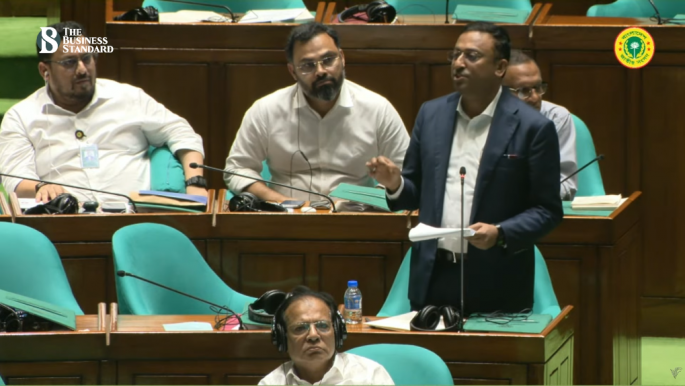
Bdbusinessdaily.com – On 8 September, Foreign Affairs State Minister Humaiun Kobir informed the national parliament that the United Arab Emirates holds no record confirming the departure of former Inspector General of Police Benazir Ahmed from its territory. The clarification came during a parliamentary session and carried significant weight, as it directly addressed a circulating claim that the ex-IGP had obtained bail in Dubai and then flown onward to the Caribbean island nation of Saint Lucia.
The minister’s intervention was prompted by a formal notice tabled by Mir Ahmad Bin Quasem, a lawmaker affiliated with the Jamaat-e-Islami party. Invoking Rule 147(1) of the parliamentary rules of procedure — a mechanism that allows members to seek written or oral answers on matters of public importance — Quasem pressed the government to disclose the status of its diplomatic and legal efforts to secure Benazir’s return to Bangladesh.
Verification with Abu Dhabi Yields No Confirmation of Departure
Humaiun Kobir explained that, before responding to the parliamentary query, his ministry had reached out directly to counterparts at the UAE Ministry of Foreign Affairs to cross-check the circulating claim. The outcome of that diplomatic verification was unambiguous: Abu Dhabi officials stated they had no knowledge of any such departure or bail-related event.
“We verified the matter with officials of the UAE Ministry of Foreign Affairs. They said they were not aware of any such incident,” Humaiun Kobir told the house.
The minister drew a logical inference from that response. If the UAE’s own foreign ministry cannot confirm that Benazir has exited the country, the most reasonable conclusion is that the former police chief remains on Emirati soil. That finding, while not a legal determination, narrows the search considerably and shifts the diplomatic conversation from tracking a fugitive across borders to pressing a single host nation for cooperation.
The Saint Lucia Claim and Its Implications
The media report that triggered the parliamentary notice alleged a two-stage movement: first, Benazir secured bail while in Dubai; second, he travelled onward to Saint Lucia, a small English-speaking island state in the eastern Caribbean. The geographic leap from the Gulf to the Caribbean would have complicated any extradition effort substantially, introducing a second sovereign jurisdiction, a different legal tradition, and likely a longer chain of diplomatic correspondence. The UAE’s denial of the departure claim effectively removes that second leg from the equation, at least for now.
For readers unfamiliar with the procedural landscape: extradition between two sovereign states is never automatic. It requires a formal request, typically routed through foreign ministries, followed by judicial review in the requested state to confirm that the underlying charges meet the legal thresholds of the receiving country. The UAE, like most jurisdictions, evaluates each petition individually rather than applying blanket treaties. Humaiun Kobir acknowledged this case-by-case posture, noting that Dhaka would sustain its diplomatic engagement with Abu Dhabi until a resolution is reached.
Why the Former IGP’s Location Matters
The Inspector General of Police is the most senior uniformed officer in Bangladesh’s law-enforcement hierarchy, overseeing a force of several hundred thousand personnel. When a former holder of that office is abroad and subject to outstanding legal proceedings at home, the question of his return touches not only individual accountability but also the perceived reach of the domestic judicial system. A prolonged absence, particularly if it appears to involve bail obtained abroad, can fuel public debate about whether senior officials enjoy informal immunity once they cross a border.
The parliamentary exchange on 8 September therefore served a dual function. On one hand, it provided a factual update — the UAE does not confirm Benazir’s departure. On the other, it placed the matter on the official record, creating a documented timeline that future questions, audits, or judicial inquiries can reference. For opposition and minority-party members such as Quasem, the notice mechanism under Rule 147(1) is one of the few tools available to compel the executive to speak on matters that may otherwise remain in the opaque space between ministries.
Diplomatic Continuity and the Call for Unity
Humaiun Kobir closed his remarks with a broader appeal, framing the extradition effort not as a partisan issue but as a matter of national interest requiring collective support.
“For this, everyone needs to remain united,” he said.
The statement implicitly acknowledged that extradition negotiations can become entangled with domestic political contestation, particularly when the individual in question held a high office during a period of political transition. By invoking unity, the minister signalled that the government intends to pursue the matter through established diplomatic channels rather than through public pressure campaigns, while also inviting other political actors to refrain from actions that might complicate bilateral relations with Abu Dhabi.
As of the parliamentary session on 8 September, the factual picture remains: Benazir Ahmed’s whereabouts within the UAE are unconfirmed by Dhaka’s own intelligence apparatus, the UAE foreign ministry has denied any departure, and Bangladesh’s diplomatic machinery will continue to press for cooperation. Until a formal extradition determination is rendered by Emirati authorities, the former IGP’s status will remain a live question in both the corridors of parliament and the broader public discourse on accountability.
Related Reading
Frequently Asked Questions
What is UAE has no information on Benazir?
UAE has no information on Benazir is the main topic of this guide. The article explains the context, practical details, and next steps readers should understand.
Why does UAE has no information on Benazir matter?
UAE has no information on Benazir matters because readers are looking for a useful answer, not just a short summary. Good content should match search intent and help them decide what to do next.