Nato Allies Intercept Suspected Russian Undersea Cable Exercise Near Svalbard
Bdbusinessdaily.com – Nato partners moved to disrupt a covert Russian naval operation in Arctic waters this spring after detecting submarines and deep-sea vessels rehearsing the use of technology that could threaten vital underwater communications cables.
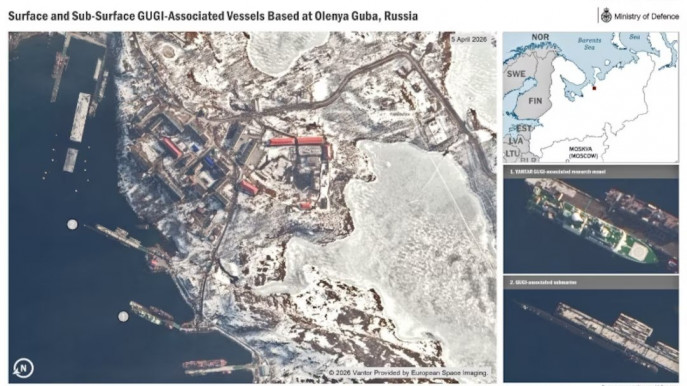
The activity took place near the isolated Svalbard archipelago, where Russian units linked to Moscow’s Main Directorate of Deep-Sea Research, known by its Russian acronym GUGI, used submersibles in an apparent simulation. Two Western officials said the exercise involved a secret capability intended to disable critical seabed infrastructure while making attribution difficult.
Britain, Norway and the United States coordinated a response at sea, tracking the Russian vessels and confronting them before the operation could be completed. The ships later departed the area. No cables were damaged during the incident.
Arctic Waters Become a Strategic Focus
The encounter highlights growing concern over the vulnerability of subsea infrastructure in the High North. Fibre-optic lines and energy connections on the seabed carry communications, data and other services that are essential to modern economies and national security.
Britain and Norway publicly acknowledged in April that Russian covert activity had been detected in and near their waters. The reported presence of a newly identified weapon, the precise Arctic location and US participation had not previously been disclosed.
Western intelligence officials have increasingly warned that Russia may be expanding sabotage-related activity in Europe while preparing for the possibility of a wider confrontation with Nato. Moscow rejects allegations that it conducts sabotage inside Nato countries or plans conflict with the alliance.
Russia’s Defence Ministry did not respond to a request for comment on the Arctic incident. The Kremlin has repeatedly denied involvement in sabotage operations across Nato territory.
Warning Delivered to Moscow
Alongside the maritime response, British and Norwegian officials brought their findings directly to Moscow. Their purpose was to demonstrate that the technology and the exercise had been detected, in the hope that this knowledge would discourage its future use.
The officials did not describe the mechanism behind the suspected system. They said the exercise was designed to model its deployment during a conflict with Nato, rather than to carry out an actual attack.
“Through our joint operation, we sent a clear message to Russia that they cannot operate covertly,” Norway’s Defence Minister Tore Sandvik said in a statement.
“We have made it unequivocally clear to Russian authorities that any attempt to target our critical infrastructure will be detected and met with consequences,” he said. “It is in no one’s interest to escalate tensions in the High North.”
Nato directed questions to the Norwegian and British authorities. Britain’s Defence Ministry referred to statements issued on 9 April that described attempted covert activities by GUGI in waters connected to Norway and Britain.
Washington and London have sanctioned the secretive Russian directorate. The White House did not respond to a request for comment, while the CIA declined to comment.
Why the Bear Gap Matters
The episode also underlines the strategic importance of the Bear Gap, the broad stretch of water between southern Svalbard and mainland Norway. One Western official said any major rise in tensions between Russia and Nato would place this route under greater scrutiny.
Russian nuclear submarines based on the Kola Peninsula would need to cross the approximately 400-mile-wide area to reach the Atlantic, before moving beyond Norway’s remote volcanic island of Jan Mayen. Control, monitoring and freedom of movement in this region have long mattered to both Russia and Nato because of its position between the Arctic and the North Atlantic.
Britain said this week that it had deployed forces to Jan Mayen in August with Norwegian and US allies. The exercise was intended to show that Nato can operate jointly in the High North, where difficult weather, distance and limited infrastructure make military activity especially demanding.
Norway is also planning a new fibre-optic cable connecting Svalbard and Jan Mayen with the mainland by 2028. The project reflects the importance of reliable Arctic connectivity, but it also illustrates why protecting cables has become a major security issue.
Wider Concerns Across Europe
Concern about attacks on critical infrastructure has sharpened since the 2022 destruction of three of the four Nord Stream subsea pipelines that supplied Germany with Russian gas. The incident showed how damage below the waterline can create serious political, economic and security consequences while leaving complex questions over responsibility and response.
Western officials argue that Russian pressure against European states has increased in recent months as fighting along much of the Ukraine front has become more static. Poland, Lithuania and Romania have confirmed various violations, adding to a broader pattern of tension around Nato’s eastern flank and beyond.
In August, an attempted drone attack on Leipzig/Halle Airport led Germany to take several measures, including shutting a Russian consulate in Bonn and a cultural centre in Berlin.
That same month, CIA Director John Ratcliffe travelled to Moscow to meet intelligence counterparts. Two people familiar with the matter said the visit was partly intended to warn Russia against escalating sabotage activity in Europe. It was not clear whether Russia’s covert subsea operations were specifically discussed. The Kremlin declined to describe the talks or provide additional details.
The Arctic operation did not result in physical damage, but its implications extend beyond one patrol or exercise. Undersea cables are difficult to monitor continuously, often cross international waters and can take considerable time to repair. A credible threat against them forces governments to balance deterrence, surveillance and diplomacy while avoiding a confrontation that could spread into the North Atlantic.
For Nato, the joint response near Svalbard was meant to establish that suspected clandestine activity can be identified and challenged. For Russia, the episode demonstrates that the High North remains a closely watched arena where movements beneath the surface may carry consequences far beyond the Arctic.
Related Reading
Frequently Asked Questions
What is Nato allies foil Russian subsea cable?
Nato allies foil Russian subsea cable is the main topic of this guide. The article explains the context, practical details, and next steps readers should understand.
Why does Nato allies foil Russian subsea cable matter?
Nato allies foil Russian subsea cable matters because readers are looking for a useful answer, not just a short summary. Good content should match search intent and help them decide what to do next.