US Faces Ammunition Pressure After Costly Iran Conflict
Bdbusinessdaily.com – The United States has spent tens of billions of dollars during its war with Iran, with the scale of missile and ammunition use now creating shortages in strategic weapons inventories and exposing limits in the country’s ability to rapidly replenish supplies.
A mandatory report delivered to Congress by the Defense Department’s inspector general on Monday, 14 September, put the estimated cost of Operation Epic Fury between 28 February and 30 June at $33.4 billion. Of that total, $22.3 billion was tied to munitions used in the conflict.
The assessment offers a rare official accounting of the financial and military strain created by the six-month confrontation in the Middle East. It warns that the volume of weapons fired has reduced important stockpiles while highlighting manufacturing obstacles that could slow the replacement of expended equipment.
“The munitions expenditure on OEF has resulted in strategic inventory shortfalls and revealed industrial base bottlenecks for munitions resupply.”
Heavy use of precision weapons
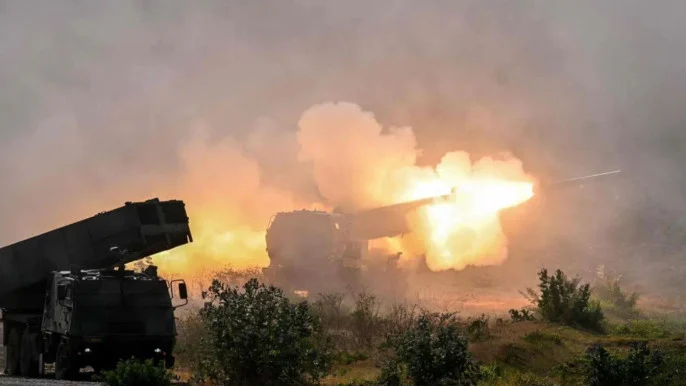
The spending figures underline how quickly a major military campaign can consume expensive guided weapons, air-defense systems and other advanced equipment. Modern conflicts frequently depend on precision munitions that require complex production chains, specialized components and lengthy manufacturing schedules. Replacing them can take far longer than deploying them.
The opening phase of the Iran war was particularly intense. US Central Command said the United States struck more than 1,000 targets during the first 24 hours of fighting. American forces have not repeated attacks on that scale in the months since, a change that reflects the different pace of the conflict after its initial period.
Questions over depleted arsenals had already emerged during the war. Shortages of long-range guided missiles and air-defense interceptors affected President Donald Trump’s broader approach to the conflict. US military forces were said to have nearly used up 80% of their available THAAD interceptors, weapons designed to defend against high-altitude ballistic missile threats.
THAAD systems are a central part of US missile defense planning, particularly in regions where American bases and allies face potential missile attacks. A sharp reduction in available interceptors can create difficult choices for military planners, who must balance immediate protection needs with the need to retain weapons for future emergencies.
Aircraft and drone losses add to the burden
The inspector general’s report also detailed damage and losses within the American fleet. Four F-15 aircraft were destroyed, while one F-35 sustained damage. Seven KC-135 tanker aircraft were damaged, affecting a class of aircraft essential for refueling combat jets over long distances.
Up to 30 MQ-9 Reaper drones were also destroyed. The remotely piloted aircraft have been used for surveillance, reconnaissance and strike operations, making their loss significant even as the United States maintains a large and diverse air capability.
The combination of munition use and equipment damage shows that the cost of the conflict extends well beyond bombs and missiles. Aircraft, drones, maintenance, personnel support and damaged installations all add pressure to defense budgets and military readiness.
Base damage across the region
Iranian attacks caused extensive damage at American military sites across the Middle East, the report said. Hundreds of buildings and structures were damaged or destroyed at US bases in Kuwait, Bahrain, Qatar, the United Arab Emirates, Saudi Arabia, Iraq, Oman and Jordan.
Those losses were not included in the $33.4 billion estimate. The report said it remains unclear whether every damaged facility will be rebuilt and who will ultimately cover the expense. That uncertainty means the full financial impact of Operation Epic Fury could rise substantially as repair decisions are made.
US bases in the region support air operations, maritime security, intelligence activity and rapid military deployments. Damage to infrastructure can therefore have consequences beyond construction costs, potentially requiring forces to adapt logistics, maintenance and operating plans while repairs are assessed.
Trump stresses weapons production
Trump has repeatedly dismissed concerns that the war has left the United States with dangerously low weapon stocks. Only weeks ago, he said the country had “virtually unlimited” ammunition.
On Monday, the president again emphasized US military production in a post on Truth Social.
“More Exquisite and Elite Weapons than at any time in our History.”
The inspector general’s findings point to a more complicated picture. The United States has substantial defense resources and a major industrial base, but the report makes clear that capacity is not limitless in the short term. High demand for advanced munitions can reveal production constraints even for the world’s largest military spender.
For Congress, the report raises practical questions about how quickly weapons inventories can be restored, whether defense manufacturers can expand output and how future military commitments could affect available supplies. The issue also carries wider strategic implications because US forces must maintain readiness not only in the Middle East but across other regions where missile defense and precision-strike capabilities may be needed.
Operation Epic Fury has therefore become both a military campaign and a test of the country’s capacity to sustain prolonged high-intensity warfare. The report’s central warning is that battlefield expenditure has consequences that continue long after missiles are launched: inventories must be rebuilt, damaged assets repaired and industrial production strengthened to meet future demands.
Related Reading
Frequently Asked Questions
What is US military says Iran war has led?
US military says Iran war has led is the main topic of this guide. The article explains the context, practical details, and next steps readers should understand.
Why does US military says Iran war has led matter?
US military says Iran war has led matters because readers are looking for a useful answer, not just a short summary. Good content should match search intent and help them decide what to do next.