DSEX Retreats as Late Selling Reverses Market Recovery
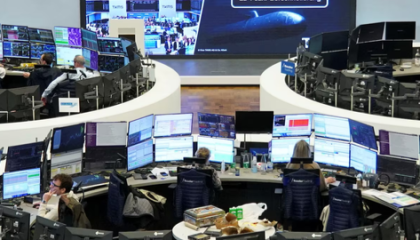
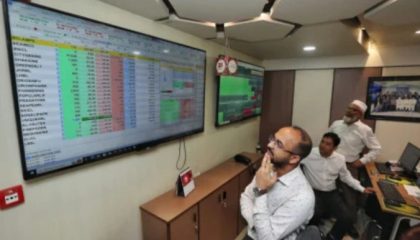
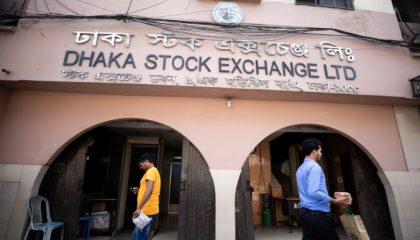
Bdbusinessdaily.com – Renewed selling at the Dhaka Stock Exchange pushed the main benchmark lower on Thursday, 1 October, as investors remained wary of corporate earnings and uncertain about whether the market could sustain its recent recovery.
The broad DSEX index lost 18.79 points, or 0.34%, and closed at 5,531.65. The decline erased the limited rebound seen in the previous trading session and highlighted the fragile mood prevailing across the market.
Other key indices also finished in negative territory. The DS30 index, which represents 30 leading blue-chip companies, slipped 4.86 points, or 0.23%, to 2,103.55. The Shariah-based DSES index declined by 2.20 points, or 0.20%, ending at 1,100.26. The CDSET index, focused on large-cap shares, fell 2.35 points, or 0.21%, to 1,103.26.
Investor Caution Builds Through the Session
Trading began under pressure as investors assessed the outlook for listed-company earnings and the wider economy. The market did not find enough buying support to hold onto its earlier recovery, and selling became more pronounced toward the end of the session.
The lack of conviction over a sustained recovery led sellers to regain dominance in the final hour of trading, dragging most stocks into negative territory.
The market commentary from EBL Securities pointed to a lack of confidence among investors about the durability of any upward movement. That concern has become important for participants watching whether the DSEX can create a stable trend after repeated periods of volatility.
Although the index weakened, trading activity increased. Turnover rose 3.4% to Tk720 crore, compared with Tk700 crore in the previous session. Higher turnover during a declining session can indicate that more investors were active, even as the balance of transactions favored sellers.
A total of 395 securities changed hands on the DSE. Of those issues, 240 declined, while 84 advanced and 71 remained unchanged. The breadth of losses showed that the pressure was spread across much of the market rather than being confined to only a small number of companies.
Financials and Consumer Sectors Face Pressure
Non-bank financial institutions recorded the steepest fall among the major sectors, dropping 1.20%. The weakness in this segment came as investors continued to weigh company-level performance and broader financial-market conditions.
Food & Allied shares fell 0.44%, followed by Fuel & Power, which declined 0.32%. Pharmaceuticals lost 0.26%, Engineering dropped 0.15%, and Banks fell 0.14%.
Telecommunications was the only major sector to register a gain, though the increase was marginal at 0.01%. Its modest advance stood out against the generally negative market environment but was not enough to offset declines across the wider index.
Among other sectors, Services and Travel and General Insurance experienced particularly heavy losses. Each of the Services and Travel segment’s shares fell 1.8%, while General Insurance declined 1.7%. Tannery was the sole sector to deliver a positive return, rising 0.4%.
The sector movements reflect how quickly sentiment can shift when investors are unsure about earnings prospects. In such periods, buyers may limit new positions while existing holders choose to reduce exposure, especially in shares viewed as more vulnerable to weaker results or uncertain near-term conditions.
Textiles Lead Trading Activity
Textile shares accounted for the largest share of turnover, representing 32.5% of the day’s trading value. General Insurance followed with 13.6%, while Pharmaceuticals contributed 8.7%.
IPDC Finance PLC emerged as the day’s most actively traded stock, with Tk51 crore worth of shares exchanged. Despite the strong level of activity, its share price fell 6.5%, illustrating the selling pressure that affected many heavily traded securities.
Block transactions made up 8.4% of total market turnover, BRAC EPL Securities noted. Such trades can have a meaningful effect on overall turnover figures because they involve large volumes of shares changing ownership outside regular smaller-lot trading activity.
For retail investors, turnover figures are often watched alongside price movements. Rising turnover can signal stronger market interest, but it does not automatically point to a positive direction. When turnover expands while most shares lose value, it may instead reflect increased selling, portfolio adjustments or investors moving cautiously between sectors.
Chittagong Exchange Ends Higher
The Chittagong Stock Exchange moved in the opposite direction. Its Selective Categories’ Index, or CSCX, gained 19.4 points, while the All Share Price Index, known as CASPI, rose 17.3 points.
The contrasting result between the two exchanges indicates that buying interest remained selective rather than absent altogether. However, the Dhaka market’s broader decline remained the more significant signal for investors tracking the country’s principal equity benchmark.
Market participants are likely to continue focusing on corporate earnings announcements, the general economic outlook and signs of whether the recovery in share prices can gain firmer support. Until those issues become clearer, cautious trading may continue to shape market direction.
Thursday’s session left the DSEX still searching for a sustained upward path. The increase in turnover offered evidence of continued participation, but the predominance of falling shares and the late-session sell-off showed that confidence has yet to strengthen across the market.
Related Reading
Frequently Asked Questions
What is Selling pressure pulls DSEX down 19 points?
Selling pressure pulls DSEX down 19 points is the main topic of this guide. The article explains the context, practical details, and next steps readers should understand.
Why does Selling pressure pulls DSEX down 19 points matter?
Selling pressure pulls DSEX down 19 points matters because readers are looking for a useful answer, not just a short summary. Good content should match search intent and help them decide what to do next.