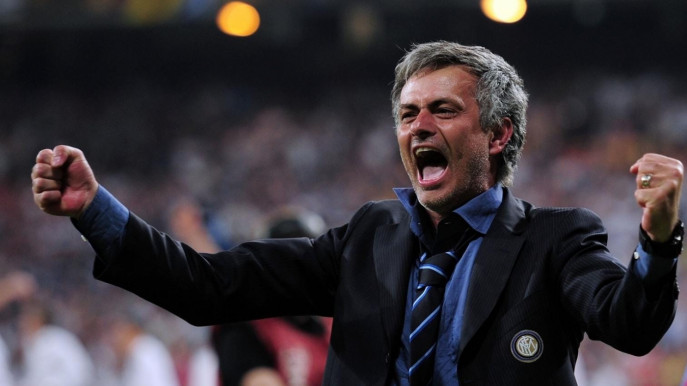
Bdbusinessdaily.com – There is a moment near the end of Mourinho , Netflix's three-part study of the most divisive manager of his generation, when José Mourinho stops the whole enterprise cold. "You are pushing me to speak about myself," he says, "and I don't want to." It is an oddly honest confession from a man who agreed to sit for a documentary about himself — and it captures precisely why this series, for all its gloss, never quite delivers. Here in Bangladesh, where Mourinho commands a devotion from many fans that borders on the religious, the reception has been rapturous.
And it is easy to see why. Director Joe Pearlman, working with the team behind Netflix's Beckham , has assembled a genuinely staggering cast of witnesses — Drogba, Lampard, Terry, Ibrahimovic, Eto'o, Zanetti, Materazzi, Figo, Casillas and Sir Alex Ferguson among them — and filmed his subject over more than two years. It looks expensive.
It moves briskly. It flatters the legend. But strip away the production sheen and a harder truth emerges: if you are the kind of viewer who would seek this out, you already know almost everything in it.
The Porto miracle of 2004. "A special one." The siege mentality, the touchline wars, the players who insist they would run through walls — John Terry, memorably, claims he would have left the pitch "in a coffin" for his manager. It is thrilling once.
By the third retelling of how Mourinho built a family that always seemed to end in divorce, the pattern feels less like revelation than a highlights reel with talking heads. The structural problem is one of arithmetic. Three episodes cannot hold a career spanning more than two and a half decades.
So the series makes choices, and the choices are revealing. Chelsea dominates. Inter — the treble, the revenge on Roman Abramovich, the defiant run to the 2010 Champions League — gets its due.
Real Madrid is handled more briefly, largely through the still-raw feud with Iker Casillas ("the rope broke," the goalkeeper says of their relationship). And then there are the silences. Manchester United and Tottenham, two clubs where Mourinho spent real years, are all but airbrushed out.
The United omission is the loud one. Mourinho has always spoken warmly of the club and of Sir Alex Ferguson, and the documentary hints at why: it prefers to remember the United that almost was rather than the one that actually happened. The single most striking new-ish disclosure sits here.
Mourinho reveals that when he left Real Madrid in 2013, he had signed to succeed Ferguson at Old Trafford. Ferguson confirms it: "As far as I was concerned, he was accepting. And then, within hours, it changed." What changed was a late-night phone call.
"He phoned me and he was crying," Ferguson recalls, "and he says: 'Alex, I can't take it. I've given my word to Chelsea.'" Mourinho went back to Stamford Bridge; United got David Moyes and a decade of drift. It is the film's best story — and a reminder of how much richer the series might have been had it lingered on the roads not taken rather than the trophies already won.
The Guardiola thread, inevitably, is where the old venom still flickers. The documentary revisits their Spanish cold war, and Mourinho cannot resist a fresh dig at his rival, now on a break from management after leaving Manchester City. "Some guys, they need a sabbatical — which is something that I hate," he says.
"For me, sabbatical means weakness." Pearlman reveals that Guardiola agreed to appear on one condition: that Mourinho ask him personally. Mourinho never did. Nothing in three hours says more about either man.
Which brings us to the photograph — the one every fan can picture. Camp Nou, the 2009-10 semi-final second leg, Inter down to ten men after Thiago Motta's dismissal, and Mourinho leaning in to murmur something to a distracted Guardiola on the touchline. For years it was football's great unheard line.
Mourinho has since told it: seeing the Barcelona bench celebrating prematurely, he simply said, "It's easy winning like this, but you're not going to win" Inter held on. It remains, in his own words, "the most wonderful defeat of my career." That anecdote is Mourinho in miniature — vivid, self-mythologising, and already told. The film's own director says he wanted us to see "the human being underneath." Occasionally, we glimpse him: the inferiority complex about his father, the admission that his family "enjoy life much more without me." Those moments are the best thing here.
There are simply too few of them, and they arrive too late. For the neutral, it is a handsome primer. For the devotee, it is a beautifully shot echo of things already known.
Related Reading
Frequently Asked Questions
What is The special one replayed?
The special one replayed is the main topic of this guide. The article explains the context, practical details, and next steps readers should understand.
Why does The special one replayed matter?
The special one replayed matters because readers are looking for a useful answer, not just a short summary. Good content should match search intent and help them decide what to do next.