Chief Justice declines opposition request for meeting on election allegations
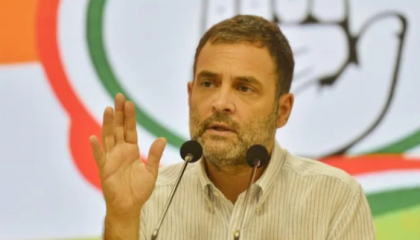
Bdbusinessdaily.com – India’s chief justice, Surya Kant, has refused a request from Congress leader Rahul Gandhi and party president Mallikarjun Kharge for a meeting concerning their allegations of “vote chori,” or electoral theft, as related matters remain before the Supreme Court.
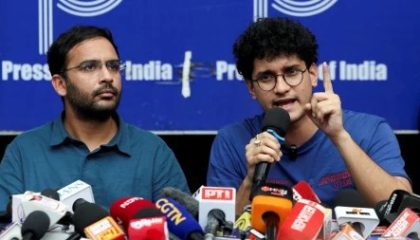
The decision was communicated ahead of a planned opposition mobilisation in New Delhi, where several parties intend to press demands linked to the conduct of elections and the revision of voter rolls.
Request centred on election demands
Gandhi and Kharge had sought a meeting with the chief justice between 4pm and 5pm on Monday, 12 October. They intended to submit a memorandum setting out a series of demands tied to their concerns about the electoral process.
The proposed memorandum called for action against what the opposition describes as electoral fraud. Its demands included the resignation of Chief Election Commissioner Gyanesh Kumar, the suspension of the Special Intensive Revision, or SIR, of electoral rolls, and a return to voting through paper ballots.
In an email response, the chief justice explained that he could not accept the request because of judicial propriety. With similar issues pending before the Supreme Court, a direct meeting with political leaders on those questions could create concerns about the court’s neutrality or the appearance of prejudgment.
“Vote chori”
The phrase has become central to the opposition’s criticism of election-related procedures. In this instance, it forms the basis of a wider set of demands that reach beyond a single complaint and include the leadership of the Election Commission, voter-list revision and the method used to cast ballots.
March planned at the Supreme Court
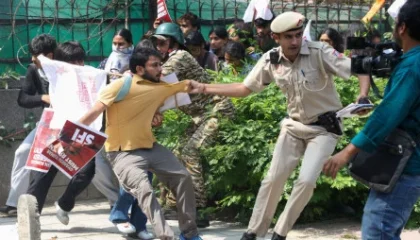
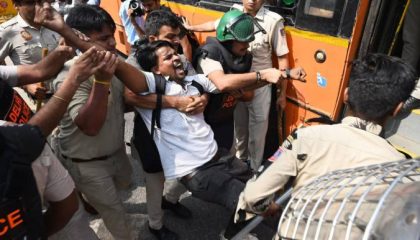
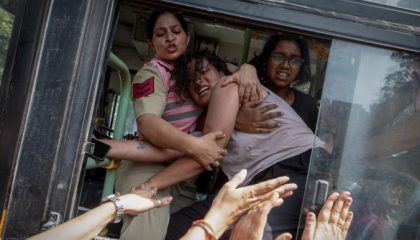
Opposition parties have announced a protest march to the Supreme Court on Monday. Congress has named the planned action the “March for Democracy,” presenting it as a demonstration focused on its concerns about electoral safeguards and democratic accountability.
The planned march follows the refusal of the requested meeting, though the chief justice’s decision does not determine the substance of the opposition’s allegations. It reflects the court’s need to maintain distance from political representations when connected legal questions are already under consideration.
For the opposition, the memorandum is intended to place its demands before the country’s highest judicial institution. For the court, the pending status of comparable matters limits how far the chief justice can engage outside formal judicial proceedings.
Why the judicial response matters
India’s Supreme Court plays a central role in resolving constitutional and public-law disputes, including cases that can affect elections and public institutions. When an issue is before the court, judges are generally expected to address it through hearings, filings and reasoned orders rather than private discussions with one side of a political dispute.
That principle is particularly significant in politically sensitive cases. Even where elected representatives seek to present a memorandum, the court must protect confidence that any eventual decision will be based on the material formally placed before it and arguments heard through the judicial process.
The refusal therefore leaves the opposition’s demands to be pursued through public protest, political engagement and any available legal channels. It also keeps the Supreme Court’s role distinct from that of the Election Commission, which is responsible for administering elections, maintaining electoral rolls and overseeing voting procedures.
Focus remains on voter rolls and ballots
The Special Intensive Revision of electoral rolls is among the issues highlighted in the proposed memorandum. Electoral rolls determine who is eligible to vote, making their preparation and revision a matter of direct importance to citizens, political parties and election authorities.
The opposition has also renewed its call for paper ballots. That demand places the voting method at the centre of the debate, alongside its broader allegation that the electoral process requires stronger safeguards.
No meeting between the chief justice and the Congress leaders is expected following the email response. Attention will now turn to Monday’s planned “March for Democracy” and to how the disputes connected with these demands proceed before the Supreme Court and other relevant institutions.
Related Reading
Frequently Asked Questions
What is India s chief justice declines meeting?
India s chief justice declines meeting is the main topic of this guide. The article explains the context, practical details, and next steps readers should understand.
Why does India s chief justice declines meeting matter?
India s chief justice declines meeting matters because readers are looking for a useful answer, not just a short summary. Good content should match search intent and help them decide what to do next.