Strait of Hormuz Talks Delayed as Energy Security Fears Grow
Bdbusinessdaily.com – Diplomatic efforts aimed at reducing tensions around the Strait of Hormuz suffered a setback ahead of Monday after a planned meeting involving Iran and Persian Gulf states was postponed. The delay came as attacks near major oil transport corridors added fresh pressure to energy markets and raised concern about the security of supplies moving out of the Middle East.
Oman’s foreign minister, Sayyid Badr Albusaidi, announced late on Sunday that the regional gathering would not go ahead as scheduled, saying the decision was taken “in the interests of consensus.” Iranian representatives had been expected to attend and present a proposed arrangement, developed with Oman, concerning shipping through the Strait of Hormuz.
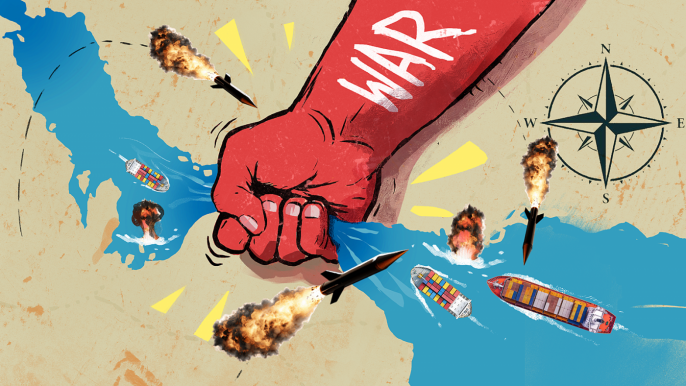
The narrow waterway is central to global energy trade because it is a key passage for oil exports from the Gulf. Any prolonged disruption can quickly affect shipping schedules, insurance costs and fuel prices far beyond the region.
Iran and Oman to Consider a New Date
An Iranian foreign ministry official said the meeting had been deferred after requests from some countries in the region. Tehran and Muscat jointly made the decision, the official said, and would work together to choose another suitable date.
The postponement weakened expectations of an immediate political breakthrough at a moment when the risks to oil traffic are increasing. Saudi Arabia has kept its major east-west oil pipeline closed since drone strikes damaged it on Friday. The roughly 1,200-kilometre, or 745-mile, route is particularly important because it can move crude across Saudi territory to the Red Sea, avoiding the Strait of Hormuz.
Its closure has heightened attention on the vulnerability of both principal export routes. Saudi Arabia has not publicly set out the full scale of the pipeline damage or provided a timetable for restoring operations. Estimates from people familiar with the situation have varied widely, ranging from a matter of days to several weeks. Satellite imagery has shown large smoke plumes at points along the pipeline.
Shipping Incidents Add to Pressure
Danger at sea has remained acute. The British maritime security agency UKMTO said on Sunday that a ship travelling through the Strait of Hormuz was hit by a projectile. The strike caused a fire and led to the evacuation of its crew.
Iran also said that an Iranian commercial vessel was struck off its coastline, killing one person and injuring four crew members. The separate incidents underlined the threat confronting merchant shipping in waters that are essential to the movement of crude oil and refined products.
At Yanbu, Saudi Arabia’s Red Sea export terminal, stored oil could sustain exports for only five to seven days if the damaged pipeline remains out of service, traders and buyers of Saudi crude said on Sunday. Beyond that period, as much as 4% of global oil supply could be at risk, in addition to barrels already affected by reduced traffic through the Strait of Hormuz.
For consumers, the impact is already visible. Oil prices climbed above $100 last week for the first time since July. In the United States, the retail diesel price reached another record on Sunday, rising above $6.20 per gallon. Diesel costs have broad consequences because the fuel is used extensively in freight transport, farming, construction and other parts of the economy.
War Aims and Regional Tensions
The recent escalation follows a relatively quieter August, when Middle Eastern oil flows had begun to recover. Violence has increased again during the conflict launched six months ago by the United States and Israel.
Iranian Foreign Minister Abbas Araqchi said in an interview with the London-based pan-Arab outlet Al-Arabi Al-Jadeed that an agreement with Oman would not by itself result in Iran reopening the strait. He said Tehran would keep the route closed until the United States met Iran’s demands.
Washington has not achieved the goals President Donald Trump identified when he began “Operation Epic Fury” in February: ending Iran’s nuclear programme, preventing Iran from attacking neighbouring countries and creating circumstances in which Iranians could overthrow their rulers.
During a weekend visit to Ireland, where he attended the Irish Open golf tournament, Trump repeated his expectation that the war would end this year, potentially shortly after the US midterm elections in November.
“Drop like a rock”
Trump used those words to describe what he expected to happen to gasoline prices after the conflict ends. For now, however, the combination of delayed diplomacy, damaged infrastructure and attacks on vessels has left markets focused on the possibility of further supply disruptions.
Houthi Activity Expands the Security Challenge
In southern Saudi Arabia, state media released footage showing damage to houses and a mosque in Jazan province after the latest alleged cross-border attack by Yemen’s Iran-aligned Houthi rebels. The Houthis separately said they had hit a Saudi military base in a neighbouring province.
The group also said it had captured Perim Island in Bab El-Mandeb, often called the “Gate of Tears,” the strategic strait at the entrance to the Red Sea. Its movement along Yemen’s Red Sea coast represents the largest surge in fighting in the country for years.
The developments present Washington with a difficult balance. The United States wants to support Saudi Arabia and help safeguard commercial shipping, yet it remains wary of being drawn further into conflict on another front. With the Strait of Hormuz and Bab El-Mandeb both under pressure, the consequences of continued instability could reach well beyond the countries directly involved.
Related Reading
Frequently Asked Questions
What is Diplomacy stumbles with postponement of meeting?
Diplomacy stumbles with postponement of meeting is the main topic of this guide. The article explains the context, practical details, and next steps readers should understand.
Why does Diplomacy stumbles with postponement of meeting matter?
Diplomacy stumbles with postponement of meeting matters because readers are looking for a useful answer, not just a short summary. Good content should match search intent and help them decide what to do next.