Teesta Basin Project Faces Longer Wait as Fresh Study Is Planned
Bdbusinessdaily.com – Construction work on Bangladesh’s long-discussed Teesta River Basin Management Project is now unlikely to start before 2029, as the government prepares to undertake a new feasibility study that is expected to run until March 2028.
The decision adds another stage to a project that has been under discussion for years and has repeatedly encountered delays involving financing options, technical planning and regional sensitivities. The Bangladesh Water Development Board (BWDB) has proposed a Tk 23.34 crore study, to be financed by the government, before a new main project proposal is prepared.
Earlier expectations had been considerably faster. The Ministry of Water Resources had indicated only months ago that project approval could come this year and that construction might begin in 2027. The new timetable makes clear that major physical works will depend on the outcome of the renewed assessment.
Approval Process Still Underway
Before the feasibility study can begin, it needs formal approval and inclusion in the Annual Development Programme (ADP). It was not listed among the unapproved projects in the current fiscal year’s ADP “green pages,” meaning an administrative step remains before the work can proceed.
Following an inter-ministerial meeting last week, efforts are underway to place the study in the ADP. Once that process is completed, the proposal can move toward approval, with implementation anticipated later this year.
The study is intended to provide the technical basis for a future, full-scale Teesta basin project. Its findings will be used to prepare a revised principal development proposal rather than relying on previous planning documents alone.
A Project Shaped by Competing Financing Plans
Bangladesh has pursued an integrated approach to Teesta river management for roughly a decade, but progress has remained uneven. In 2016, BWDB signed a memorandum of understanding with PowerChina, a Chinese state-owned company. PowerChina later submitted a feasibility report around 2020.
India also showed interest in financing the project in 2024. The involvement of major regional partners has highlighted the strategic importance of the Teesta, while also contributing to the need for careful planning before large commitments are made.
Under the previous Awami League administration, the initiative did not advance to implementation. On 30 June 2025, however, the Planning Commission under the interim government gave in-principle approval for the first phase of the Teesta River Comprehensive Management and Restoration Project.
The Economic Relations Division then sent Beijing a preliminary proposal seeking a Chinese loan of $550.62 million. That financing was intended to cover most of the estimated $747.25 million cost of the first phase, with Bangladesh providing the remaining amount from domestic resources.
China has welcomed the decision to reassess the basin and has offered technical support for the planned research. The current administration has also reaffirmed its intention to move forward with both the Teesta project and the Padma Barrage project, although each still requires further procedural and technical work.
What the New Study Will Examine
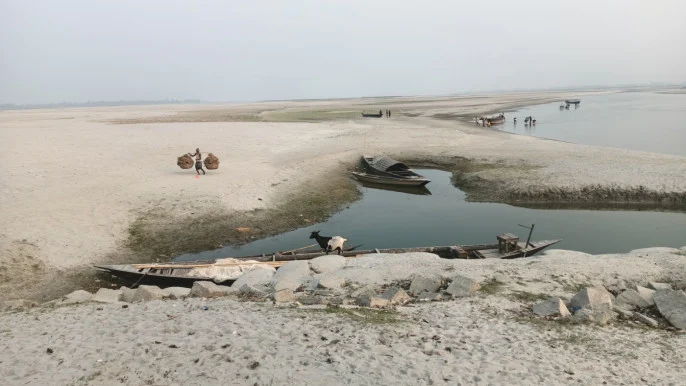
The proposed assessment will examine the Teesta’s hydrological, hydraulic, morphological, environmental and socio-economic conditions. Its objective is to identify durable measures for stabilising the river, reducing erosion and managing sediment.
The work will cover the entire Bangladeshi stretch of the Teesta, including areas in Nilphamari, Lalmonirhat, Rangpur, Kurigram and Gaibandha. Connected tributaries will also be part of the analysis, reflecting the fact that river behaviour, flooding and sediment movement cannot be understood by examining isolated sections alone.
One portion of the study will establish an analytical baseline. It will assess erosion, flood exposure, sediment patterns and seasonal water shortages. Researchers will also consider opportunities for water storage, conservation and more effective irrigation planning through sustainable use of surface water and groundwater.
These issues have major consequences for communities in northern Bangladesh. Riverbank erosion can damage homes, farmland and local infrastructure, while irregular water availability can limit agricultural planning. Flooding and sediment deposition can alter channels and affect the performance of embankments, barrages and irrigation systems.
Physical Models to Test River Management Options
A second component will involve physical modelling. Scaled hydraulic models are expected to simulate changes in river flow, sediment transport and channel form under different conditions.
The models will be used to evaluate possible interventions, including river training structures, dredging, channelisation and flow-regulation measures. They will also examine how different options could affect flood risks, agricultural land, infrastructure and the existing Teesta Barrage Project.
Physical modelling can help planners compare potential interventions before committing to expensive construction. In a river system where channels, sediment and seasonal flows interact continuously, the results may help identify measures that reduce risks without creating new pressure elsewhere in the basin.
The study’s broader purpose is to create a long-term framework for climate resilience and economic development in the northern region. Officials expect the eventual technical plan to support more reliable water access, improve irrigation and strengthen flood protection.
Long-Term Goals for Northern Bangladesh
The broader Teesta programme aims to expand irrigation over 750,000 hectares and protect more than one crore people from severe annual flooding. Meeting those goals will require a plan that addresses both immediate river-management needs and long-term changes in water availability, sediment movement and climate-related risks.
The extended timetable may postpone construction, but it also creates an opportunity to revisit the project with updated technical analysis across the basin. For residents of the Teesta region, the key question will be whether the new study produces a workable plan that can finally move from proposals and financing discussions to implementation.
With completion set for March 2028, the feasibility exercise will determine the next stage of Bangladesh’s approach to the Teesta. Until then, construction of the proposed megaproject is expected to remain a future prospect rather than an immediate undertaking.
Related Reading
Frequently Asked Questions
What is Teesta project construction unlikely before 2029?
Teesta project construction unlikely before 2029 is the main topic of this guide. The article explains the context, practical details, and next steps readers should understand.
Why does Teesta project construction unlikely before 2029 matter?
Teesta project construction unlikely before 2029 matters because readers are looking for a useful answer, not just a short summary. Good content should match search intent and help them decide what to do next.