
When a Smartphone Costs More Than a Life: The Tragic Economics of Status
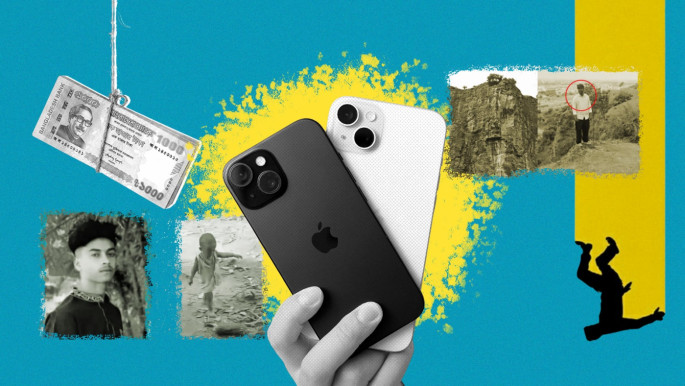
Bdbusinessdaily.com – Near Tisgaon in India, an eighteen-year-old young man leapt from Khavdya Dongar after his parents declined to purchase him a new iPhone. In the desperate attempt to pull him back from the fall, both his mother and father lost their own lives. Three members of a single household, extinguished in one afternoon over a disagreement about a piece of technology. The Times of India carried the story, and it landed with the weight of a parable: what had become of a world in which a gadget could outweigh flesh and blood?
Only days earlier, a parallel horror unfolded in Patuakhali, Bangladesh, where a father reportedly handed over his one-and-a-half-year-old child for roughly Tk100,000 so he could walk out of a store with the latest Apple phone in hand. The two events, separated by geography and circumstance, share a common architecture: the gravitational pull of a branded object bending human decisions past every rational limit.
The Psychology of Wanting to Be Seen
Craving a sharper camera, a quicker processor, or a longer battery life is, on its face, a mundane consumer preference. What transforms that preference into something more troubling is the symbolic layer draped over the hardware. A premium smartphone stops being merely a communication device; it becomes a badge, a declaration, a shorthand for taste and social position. The buyer is no longer asking, “Will this improve my daily tasks?” The question has quietly shifted to, “What will my peers assume about me if I am seen without it?”
This dynamic is nothing new. In the late nineteenth century, the economist and sociologist Thorstein Veblen named the mechanism with a phrase that still carries force:
“The tendency to purchase and display goods partly to demonstrate wealth and social standing.”
Veblen called it conspicuous consumption, and his observation maps cleanly onto the modern landscape. A wristwatch that costs more than a month’s rent is no longer just a timepiece; it is a sentence spoken in metal and glass. A luxury automobile is not merely a vehicle from point A to point B; it is a statement about the driver’s place in a hierarchy. When self-worth becomes tethered to such objects, the internal calculus of every purchase tilts toward performance rather than utility.
The Amplifier: Media and the Comparison Engine
If status consumption is the fuel, digital media is the oxygen. Instagram, Facebook, TikTok, YouTube, lifestyle magazines, and a relentless stream of advertisements now place curated images of other people’s possessions directly into the viewer’s daily feed. An unboxing video here, a celebrity spotted with the newest model there, an influencer declaring a particular gadget a “must-have” — each frame reinforces a single subliminal instruction: you are lagging behind if you do not own this.
The comparison is almost never fair. What reaches the viewer is a heavily edited, selectively framed slice of another person’s life, set against the unvarnished reality of their own. Yet the brain processes both as equivalent data points. The result is a culture in which desire is triggered less by genuine need and more by proximity to someone else’s acquisition. Young people, for whom social belonging and identity formation are still in flux, feel this pressure with particular intensity. Consumer brands understand the psychology intimately. Modern marketing rarely pitches a product in isolation; it sells the lifestyle wrapped around it. A phone becomes a symbol of creative ambition. A car becomes freedom. A watch becomes earned achievement. The customer is offered an aspiration as much as a physical object, and that aspiration does not expire the moment the receipt is filed away. Yesterday’s marvel becomes today’s ordinary when next month’s model drops, and the wanting simply reattaches to the new target.
When Desire Outruns Means
The danger crystallises when the gap between want and wallet widens. A young person who cannot afford the object of desire does not simply accept the limitation; constant exposure to consumer imagery reframes that economic constraint as a personal deficiency. The pressure that follows can push individuals into borrowing, accumulating debt, or stripping away essentials to sustain a particular appearance. In extreme cases, the belief that owning one specific product will rewrite how others perceive them can drive reckless, even self-destructive choices.
The Patuakhali sale and the Tisgaon deaths are, of course, extreme endpoints. Reducing either tragedy to a single gadget would be reductive; family dynamics, emotional fragility, financial precarity, and cultural expectations all converge in such moments. What the incidents do illuminate, however, is the scale of the problem: a consumer culture that has trained entire generations to treat branded objects as non-negotiable markers of selfhood, and a media ecosystem that feeds that training endlessly, without pause or counterweight.
The question left hanging by these stories is not whether people should own smartphones or luxury goods. It is whether a society can continue to equate human worth with the logos on one’s possessions, and whether the institutions that profit from that equation — advertisers, platforms, retailers — bear any responsibility for the lives bent around their products. Until the answer shifts, the next tragedy may already be scrolling through someone’s feed.
Related Reading
Frequently Asked Questions
What is Status culture and consumerism?
Status culture and consumerism is the main topic of this guide. The article explains the context, practical details, and next steps readers should understand.
Why does Status culture and consumerism matter?
Status culture and consumerism matters because readers are looking for a useful answer, not just a short summary. Good content should match search intent and help them decide what to do next.