State Minister Vows Full Support for Muslin Research
Bdbusinessdaily.com – State minister vows full support for Muslin research as Bangladesh works to revive the historic Dhaka Muslin industry through Futi Karpas cotton research, skilled weaving and private-sector participation. The government says it will provide financial and other assistance to help researchers continue work on the rare cotton linked to the celebrated fabric.
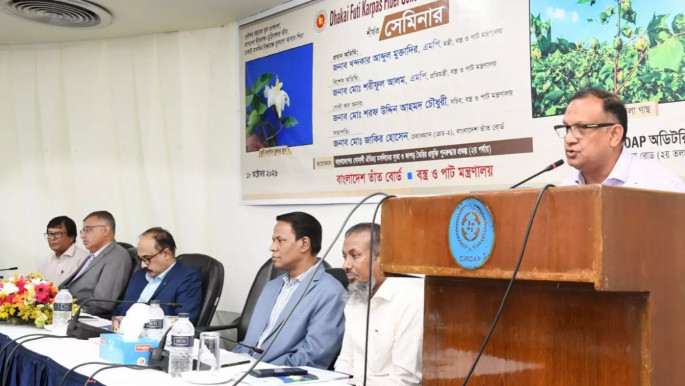
Speaking at a seminar organised by the Bangladesh Handloom Board at the CIRDAP auditorium in Dhaka, State Minister for Textiles and Jute Shariful Alam stressed that research findings should be transferred to entrepreneurs who can help develop Muslin as a sustainable commercial product.
“Steps will be taken to swiftly and effectively transfer the technology for producing the revived Muslin to private entrepreneurs,” the state minister said.
Turning Muslin Research Into Business Opportunities
The revival of Dhaka Muslin involves more than reproducing a historic textile. It requires progress in Futi Karpas cultivation, fibre research, spinning, weaving, quality control and marketing. Researchers have been studying varieties of Futi Karpas, including their genetic features and fibre quality, to support sustainable Muslin production.
State minister vows full support for Muslin research because the work could create a stronger base for production and help protect an important part of Bangladesh’s cultural heritage. He said research should not remain confined to laboratories if the country is to build a viable industry around the revived fabric.
Entrepreneurs, investors and skilled weavers will have an important role in bringing the technology into commercial use. Any expansion, however, must preserve the fine quality and distinctive character that make Dhaka Muslin valuable to buyers in Bangladesh and abroad.
“If production, marketing and export opportunities can be created while preserving its distinctiveness and quality, it will contribute positively to employment generation, foreign exchange earnings and the national economy,” he said.
Ministry Support for Futi Karpas Development
The state minister said the Ministry of Textiles and Jute would provide maximum financial and other support for research on Futi Karpas and Muslin. He also said researchers should be able to carry out their work without unnecessary obstacles.
State minister vows full support for Muslin research in line with the broader goal of safeguarding the fabric’s heritage while creating practical economic opportunities. A dependable supply of suitable cotton, improved understanding of fibre properties and trained craftspeople are all necessary for the initiative to succeed.
The Bangladesh Handloom Board’s involvement also reflects the close connection between Muslin revival and the country’s handloom sector. Weavers remain central to the process: scientific advances can improve raw materials and methods, but specialised craftsmanship is needed to transform fine fibre into Muslin.
Why Quality Matters for Dhaka Muslin
Dhaka Muslin is known for its exceptional fineness and the heritage associated with its production. Protecting those qualities is essential if the revived textile is to earn confidence in premium domestic and international markets.
Commercialisation could support employment and export earnings, but it must be matched by careful standards for cultivation, yarn preparation, weaving and finished fabric. The government’s proposed support and technology transfer could help connect researchers, handloom workers and businesses in that effort.
Frequently Asked Questions
What is Futi Karpas?
Futi Karpas is the traditional cotton associated with the production of historic Dhaka Muslin. Research into its varieties, genetic characteristics and fibre quality is a key part of efforts to revive the fabric in Bangladesh.
Why is technology transfer important for Muslin?
Technology transfer can help entrepreneurs use research findings in real production. It may connect cotton research and handloom skills with investment, quality control, marketing and export opportunities.
How could Muslin revival benefit Bangladesh?
If production expands while maintaining quality and distinctiveness, revived Muslin could create work for weavers and related businesses, support exports and strengthen Bangladesh’s textile heritage.