Bangladesh Prime Minister Departs Tokyo After Extended Aircraft Delay
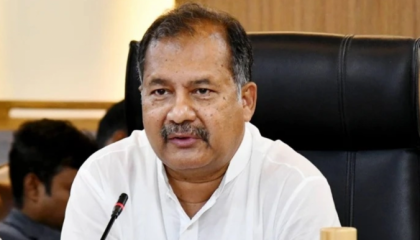
Bdbusinessdaily.com – Prime Minister Tarique Rahman began his journey back to Dhaka from Tokyo late on 29 October after a Biman Bangladesh Airlines aircraft experienced a technical fault that delayed departure by four hours and 44 minutes.
The flight eventually left Narita International Airport at 10:44pm local time, bringing the prime minister’s four-day state visit to Japan to a close. Engineers resolved the problem after passengers had been taken off the aircraft and the plane returned to the tarmac.
Technical Problem Halted Planned Departure
The aircraft had originally been due to leave Tokyo at 6pm local time. It moved toward the runway at roughly 6:18pm, but stopped before take-off. Around 15 minutes later, Captain Md Imamul Islam informed those on board that the flight could not continue because of a technical issue.
Tarique Rahman, his wife Dr Zubaida Rahman and members of the official delegation were among the passengers on the aircraft. Following the captain’s announcement, everyone disembarked while two engineers examined and repaired the fault.
At about 8pm, passengers were told that the work would require another two and a half hours. Near 9:50pm, the captain announced that the technical problem had been corrected and that boarding would restart shortly afterward.
Civil Aviation and Tourism Minister M Rashiduzzaman Millat, who travelled with the prime minister during the Japan visit, apologised to passengers at Tokyo airport at around 10:15pm. He said the disruption resulted from a technical glitch that had been fully addressed and stated that the aircraft was safe for flight.
Four-Day Visit Focused on Trade and Investment
The delayed departure came at the end of a visit centred on expanding cooperation between Bangladesh and Japan. Tarique arrived in Japan on 26 October at the invitation of Japanese Prime Minister Sanae Takaichi.
During the trip, the two leaders held a bilateral meeting at the Japanese Prime Minister’s Office in Tokyo. Their discussions covered trade, investment, energy, information and communication technology, railways, infrastructure and other areas of cooperation.
The visit also included meetings with chairmen, chief executive officers and senior representatives of Japanese companies and financial institutions. Those discussions focused on strengthening economic links and encouraging greater Japanese investment in Bangladesh.
For Bangladesh, such engagement is significant because business investment, skills partnerships and technology transfer can support broader development priorities. The meetings created a platform for Bangladeshi and Japanese representatives to discuss possible areas of commercial cooperation without limiting the conversation to government-level agreements.
Tarique also met Japanese political figures, business representatives and development partners to explore opportunities involving employment generation, investment, technology transfer and economic cooperation. He exchanged views with members of the Bangladeshi community in Japan as well, outlining plans for national development and seeking their support in efforts to build a better Bangladesh.
Agreements and Loan Commitments
Bangladesh and Japan signed six cooperation instruments during the visit. The agreements covered coastal security, economic relations, the investment climate, agriculture, skills development, fisheries, livestock and climate change.
The two countries also committed to two loan projects with a total value of 46.56 billion yen, estimated at about $295.5 million. One loan, worth 15.88 billion yen, is intended to improve Bangladesh’s investment environment. The other, amounting to 30.68 billion yen, will support the Upazila Governance and Development Project, Phase 2.
Improving the investment environment is closely tied to Bangladesh’s effort to attract more international business activity. Meanwhile, the Upazila Governance and Development Project is aimed at supporting development at the local-government level, where public services and infrastructure needs often have a direct effect on communities.
Private-sector engagement was another major part of the visit. Seventeen memorandums of understanding were signed between private entities at the Japan External Trade Organization, or JETRO. The agreements reflected efforts to broaden business connections and encourage Japanese investment in Bangladesh.
At the Bangladesh-Japan Economic Forum, the prime minister highlighted investment opportunities in Bangladesh and called on Japanese companies to deepen their involvement in the country. The forum brought attention to the role of private companies alongside official development cooperation and government-to-government commitments.
Relations Expected to Gain Further Momentum
State Minister for Foreign Affairs Humaiun Kobir said the visit is expected to reinforce Bangladesh-Japan relations while creating additional opportunities for trade, investment and development cooperation.
The trip combined diplomatic discussions, financing commitments and business outreach, underscoring the broad scope of ties between the two countries. While the final hours in Tokyo were disrupted by the aircraft malfunction, the completion of repairs allowed the delegation and other passengers to depart safely for Dhaka later that night.
The flight delay served as an unexpected conclusion to a schedule that had otherwise focused on future cooperation. With agreements spanning security, agriculture, climate issues, local development and investment, the outcomes of the visit now move from high-level discussions toward implementation and follow-up by the relevant institutions and businesses.
Related Reading
Frequently Asked Questions
What is PM leaves Tokyo for Dhaka after?
PM leaves Tokyo for Dhaka after is the main topic of this guide. The article explains the context, practical details, and next steps readers should understand.
Why does PM leaves Tokyo for Dhaka after matter?
PM leaves Tokyo for Dhaka after matters because readers are looking for a useful answer, not just a short summary. Good content should match search intent and help them decide what to do next.