Climate and Displacement Caucus Sets Out Initial Parliamentary Agenda
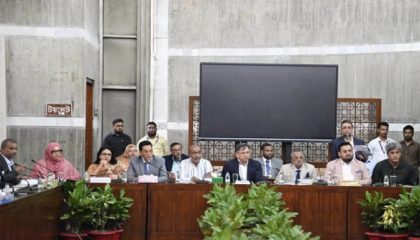
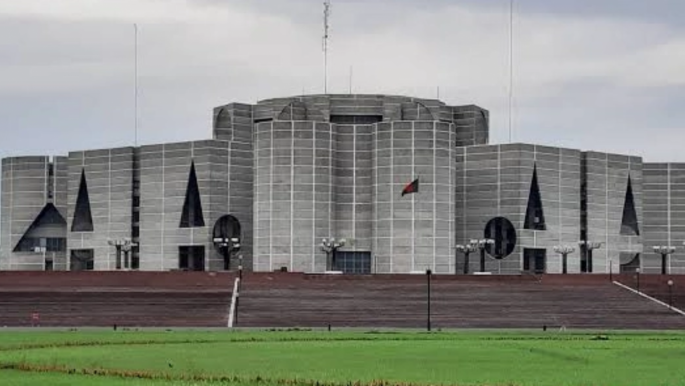
Bdbusinessdaily.com – A newly formed parliamentary caucus focused on climate change and displacement has begun outlining how it will address the issues within the 13th Jatiya Sangsad. Its first meeting was held at the Parliament Complex on 4 October, bringing together caucus members, government officials and Parliament Secretariat representatives.
Gias Uddin Quader Chowdhury, chairman of the Parliamentary Caucus on Climate Change and Displacement, presided over the session. Discussions centred on a proposed work plan and the caucus’s future direction, with members considering ways to strengthen parliamentary attention to the links between climate pressures and population displacement.
The meeting marked an early organisational step for the group, which has been created to consider how climate-related challenges affect people forced to move from their homes or communities. Its members discussed the need for cooperation across government institutions, reflecting the fact that climate and displacement concerns can involve environmental policy, water management, disaster response, local administration, public finance and international engagement.
Government Agencies Proposed for Future Discussions
Participants recommended that representatives from several ministries and agencies be invited to the caucus’s next meeting. The proposed list includes the Ministry of Environment, Forest and Climate Change; the Ministry of Local Government, Rural Development and Co-operatives; the Internal Resources Division; the Ministry of Foreign Affairs; the Ministry of Water Resources; and the Ministry of Disaster Management and Relief.
Inviting these bodies could allow the caucus to hear directly from institutions whose work intersects with climate adaptation, local services, disaster preparedness, water issues and the broader policy response to displacement. The proposal also underlined the caucus’s intention to engage with government departments rather than treat climate-related movement of people as an isolated parliamentary subject.
Members additionally suggested establishing a coordination committee made up of representatives from the relevant ministries. The proposed committee would be intended to improve communication and cooperation on climate change and displacement matters.
Coordination is a central consideration because people affected by environmental disruption may need support in several areas at once. These can include disaster relief, access to local services, water security, housing-related concerns and longer-term planning. A coordinated approach can help policymakers identify where responsibilities overlap and where further discussion may be needed.
Workshop Included in First Session
The gathering also included a workshop on climate change and displacement, to which members of the parliamentary caucus were invited. The workshop provided an opportunity for participants to focus on the subject alongside the caucus’s formal planning discussion.
The meeting opened with a recitation from the Quran. This was followed by an introductory session involving the caucus chairman and members, officials from the Ministry of Environment, Forest and Climate Change and the Ministry of Foreign Affairs, as well as relevant personnel from the Parliament Secretariat.
Among those present were the Additional Secretary of the Ministry of Environment, Forest and Climate Change, the Managing Director of RMMRU, the Director General of the Ministry of Foreign Affairs and senior Parliament Secretariat officials.
Parliamentary caucus members Amirul Islam Khan, Rashedul Islam Rashed, Anwarul Haque, Rumeen Farhana and Marzia Begum attended the meeting.
A Forum for Continued Parliamentary Engagement
Parliamentary caucuses can provide a forum for lawmakers to examine an issue in greater depth, exchange views and maintain dialogue with relevant institutions. In this case, the caucus’s initial proposals point to a focus on sustained engagement rather than a one-time discussion.
Climate change and displacement are closely connected topics in public policy because environmental pressures can affect livelihoods, safety and access to essential resources. Parliamentary discussion can help bring together the perspectives of ministries and public bodies that operate in different parts of the policy system.
The caucus has not announced specific policy decisions from its first meeting. Instead, its members concentrated on setting an agenda, identifying government stakeholders and considering a coordination mechanism. The next meeting is expected to provide an opportunity to continue that process with invited representatives from the proposed ministries and agencies.
By beginning with a work plan and a wider institutional dialogue, the Parliamentary Caucus on Climate Change and Displacement has signalled that it intends to develop an organised platform for examining the issue within the current parliament.
Related Reading
Frequently Asked Questions
What is Parliamentary caucus on climate change displacement?
Parliamentary caucus on climate change displacement is the main topic of this guide. The article explains the context, practical details, and next steps readers should understand.
Why does Parliamentary caucus on climate change displacement matter?
Parliamentary caucus on climate change displacement matters because readers are looking for a useful answer, not just a short summary. Good content should match search intent and help them decide what to do next.