More Than 21 Lakh Applicants Pursue 1,485 Social Services Jobs
Bdbusinessdaily.com – Bangladesh’s search for secure government employment has reached an extraordinary scale, with more than 21 lakh candidates applying for 1,485 posts under the Department of Social Services. The demand works out to roughly 1,430 applicants for each vacancy, illustrating the immense pressure facing people seeking work as private-sector opportunities remain limited.
The recruitment drive covers 52 job categories across Grades 13 to 20. The available positions include both permanent and temporary roles, and applications were invited in May. Candidates submitted online applications from 2 June through 23 June, paying between Tk50 and Tk100 through Teletalk, the state-owned mobile operator.
What began as a recruitment exercise has now become a major administrative challenge. Three months after applications closed, authorities have yet to announce examination dates because organising tests for more than 21 lakh people requires extensive planning, funding and coordination.
Recruitment Process Faces Logistical Pressure
Officials must arrange suitable examination venues, print large volumes of question papers, appoint invigilators and establish a system for checking answer scripts. They also need to decide how applicants will be screened before later stages of recruitment, including written, practical and oral tests where applicable.
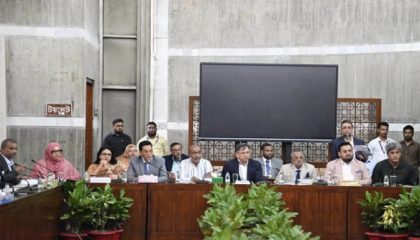
“We have sought approval from the Ministry of Public Administration for a proposal on how to complete the recruitment process for the 1,485 vacant posts as quickly as possible, given that 21.23 lakh people have applied,” Mohammad Abu Yusuf, secretary of the social welfare ministry, said.
The Department of Social Services has sought direction from the Ministry of Public Administration and the Ministry of Finance on the examination method, the budget and the process for narrowing the candidate pool. An official of the department said the number of applicants makes it especially difficult to accommodate everyone in an initial examination.
Once a procedure receives approval, authorities are expected to announce the examination schedule and centre allocations. The recruitment process is planned to include written tests, practical assessments for relevant posts and oral examinations.
“We are preparing to conduct the examination after receiving the applications so that we can complete the recruitment process as quickly and transparently as possible,” Shah Mohammad Mahboob, director general of the Department of Social Services, said.
“We have sought the ministry’s assistance in deciding what needs to be done because of the large number of applications,” he added.
Applications Far Exceed Recent BCS Totals
The scale of applications is notable even in a country where government recruitment examinations routinely attract large numbers of candidates. The Department of Social Services received far more applications than any of the five most recent general Bangladesh Civil Service examinations.
The 50th BCS examination, the latest general BCS process, drew about 2.90 lakh applications for 2,150 posts. That was the lowest applicant total among the five latest general BCS examinations. The 49th BCS received 3.12 lakh applications, while the 47th, 46th and 45th BCS examinations registered 3.74 lakh, 3.37 lakh and 3.46 lakh applications respectively.
The 48th BCS was designed specifically for recruiting doctors, making it unsuitable for a direct comparison with broader government recruitment drives. Even so, the contrast between the BCS figures and the 21.23 lakh applications for Social Services Department positions highlights how sharply demand can concentrate around a limited number of public-sector vacancies.
A Labour Market Under Strain
The rush comes amid persistent concern about employment conditions, particularly for educated young people. A research report released in August last year on Bangladesh’s economic realities and policy options described the situation as an “employment emergency.”
Hossain Zillur Rahman, chairman of the Power and Participation Research Centre, presented that report and later described unemployment in Bangladesh as having reached an “epidemic level.” A year later, the pressure on jobseekers appears to remain substantial.
The International Monetary Fund recently said that about 36% of Bangladeshis with postsecondary education are unemployed. That figure points to a difficult transition between education and stable work for many young people, especially when formal positions with predictable salaries, benefits and career structures are scarce.
Government jobs remain highly sought after because they are widely viewed as comparatively secure. Yet the number of vacancies cannot match the volume of people looking for employment. For applicants, a single recruitment circular can represent a rare opportunity; for public institutions, it can create an operational burden far beyond the original number of posts.
What Comes Next for Applicants
For the 21.23 lakh candidates, the immediate question is when the first examination will take place and what screening system will be used. The final approach depends on approval of the department’s proposal and the resources available to conduct the process.
Authorities face the difficult task of balancing speed with fairness. A recruitment test involving such a large population must provide adequate venues, reliable supervision and a transparent evaluation process. Any initial filtering method will also carry significant importance because it will determine who progresses to later written, practical and oral stages.
The overwhelming response to the vacancies offers a clear picture of the gap between available public-sector jobs and the number of people seeking them. Until more employment opportunities emerge across the wider economy, competition for government posts is likely to remain one of the country’s most visible signs of labour-market pressure.
Related Reading
Frequently Asked Questions
What is As private jobs dry up 21 lakh?
As private jobs dry up 21 lakh is the main topic of this guide. The article explains the context, practical details, and next steps readers should understand.
Why does As private jobs dry up 21 lakh matter?
As private jobs dry up 21 lakh matters because readers are looking for a useful answer, not just a short summary. Good content should match search intent and help them decide what to do next.