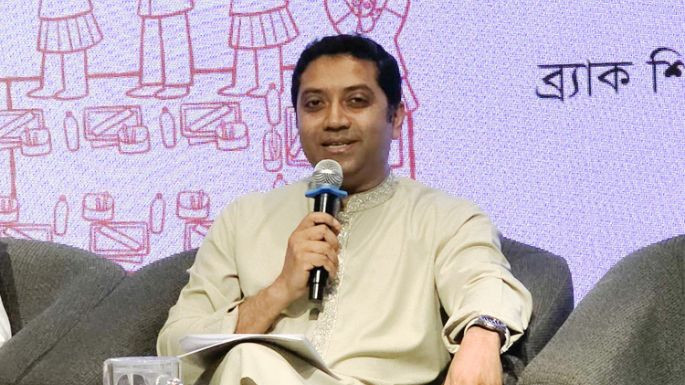
2% of GDP Allocated to Education: Quality Over Buildings
Bdbusinessdaily.com – When State Minister for Primary and Mass Education Bobby Hajjaj took the stage in Dhaka on 8 September to mark International Literacy Day 2026, his message was blunt: the 2% of GDP allocated to education will fund classrooms, curricula, and children — not concrete and steel. Speaking at a ceremony organized by the Bureau of Non-Formal Education, Hajjaj framed the government’s fiscal pledge as a re-enrollment and pedagogy programme, explicitly rejecting the notion that the money should flow into new school buildings.
From Infrastructure Spending to Student Outcomes
Bangladesh’s primary-education system has long been weighed down by dropout rates that spike in rural upazilas, where families keep girls and younger children at home because the nearest school lacks meals, uniforms, or even a functioning classroom. The minister’s intervention reframes the budget line item: rather than a generic spending increase, the allocation is now tied to measurable outcomes — re-enrollment numbers, literacy gains, and retention rates.
“The prime minister has allocated 2% of GDP to the education budget. In the future, it will be 5%. This is not just for building construction; this budget will go towards providing proper primary education and bringing students back to school.”
Positioning the near-term figure as a floor rather than a ceiling, Hajjaj pointed to a longer-term trajectory toward five percent of GDP — a level that aligns Bangladesh with the four-to-six-percent range most developing economies target for education. The gap between current spending and the scale of the country’s primary-school-age population, he argued, demands sustained fiscal escalation, not a one-year spike.
Accelerated Learning, Meals, and Uniforms as Re-Entry Tools
The operational core of the plan rests on accelerated-learning modules: compressed curricula that let children who have been out of school for a year or more recover foundational literacy and numeracy fast enough to rejoin a grade-appropriate class. Hajjaj directed the Directorate of Primary Education to fold these modules into its existing remedial-education framework, giving the approach an institutional home inside the formal system rather than leaving it as a parallel, ad-hoc intervention.
Alongside the academic track, the minister announced that mid-day meal schemes and free-uniform distributions would be deployed as practical incentives to pull children back through the school gate. He added that further support measures could be layered in if initial uptake fell short, keeping the policy architecture flexible rather than locked to a single lever.
Expanding Non-Formal Education Beyond Forty Districts
A second pillar of the address targeted the Bureau of Non-Formal Education’s current footprint: roughly forty districts, forty designated locations, and forty upazilas — a reach that covers only a sliver of Bangladesh’s 64 districts and 499 upazilas. Hajjaj called for scaling well beyond that limited geography, noting that planning discussions for the next expansion phase would be convened within weeks. Non-formal programmes serve children who never entered the formal system or who dropped out before completing primary schooling, delivering flexible, community-based instruction in literacy, numeracy, and life skills.
“These programmes should not remain limited to 40 districts, 40 locations and 40 upazilas. It is important to expand them on a larger scale.”
Education researchers broadly regard such programmes as a cost-effective complement to formal schooling, particularly where infrastructure is sparse or cultural barriers keep girls out of classrooms. Scaling them, in the minister’s framing, is not an alternative to formal education but a bridge back into it.
One Ministry, One Family
Hajjaj closed by stressing institutional unity: the Bureau of Non-Formal Education, the Directorate of Primary Education, and every other agency under the ministry’s umbrella operate under a single roof. His “one ministry and one family” language was aimed squarely at the bureaucratic fragmentation that has historically slowed coordinated education reform in Bangladesh, signaling that the 2% of GDP allocated to education will be managed as a unified programme rather than a scatter of competing agency priorities.
Frequently Asked Questions
What does the 2% of GDP allocated to education actually fund? According to the minister’s remarks, the allocation is earmarked for accelerated-learning curricula, mid-day meal schemes, free-uniform distributions, and expanded non-formal-education programmes — not for new school construction.
When does the five-percent target take effect? Hajjaj described five percent of GDP as a future goal without specifying a date. The near-term commitment remains at two percent, positioned as a minimum floor.
How many districts does non-formal education currently cover? Approximately forty districts, forty locations, and forty upazilas. Bangladesh has 64 districts and 499 upazilas in total, so the current footprint reaches well under half the country’s administrative geography.
Who oversees the accelerated-learning integration? The Directorate of Primary Education is tasked with embedding accelerated-learning modules into its existing remedial-education framework, keeping the intervention inside the formal system.