Experimental Black Rice Crop Sparks Interest in Brahmanbaria
Bdbusinessdaily.com – A trial field of black rice in Akhaura upazila is drawing the attention of farmers and residents, offering a possible new path for crop diversity and stronger returns from agricultural land in Brahmanbaria.
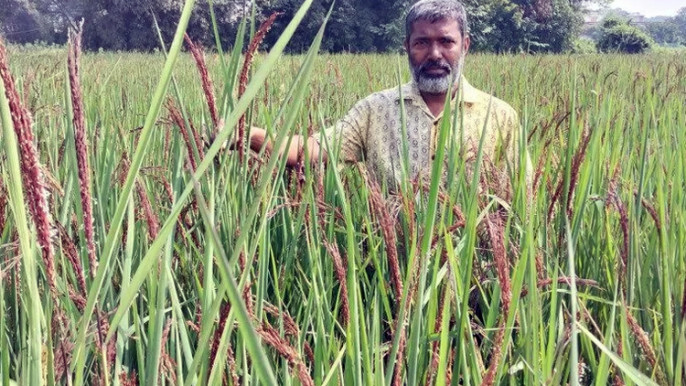
Simon Molla of Birchandrapur village in Dakshin union has planted the specialty rice on two bighas this season. The plants have reached the panicle-forming stage, with their unusually dark panicles becoming a visible attraction in the area.
For Molla, the project is a test of whether a premium rice variety can work alongside the conventional paddy crops that have long dominated local farming. The final decision on expanding the crop will rest on two practical questions: how much rice the land produces and what price buyers are willing to pay after harvest.
“I have cultivated black rice on two bighas of land on an experimental basis. If the yield is satisfactory and I receive a fair price for the produce, I will expand cultivation to a larger area next season,” he said.
From online interest to a field trial
Molla had previously focused on familiar rice varieties. His interest in black rice grew after he watched videos about its cultivation on YouTube and began exploring whether it could be grown successfully in his own area.
He purchased seed for Tk 500 per kilogram, prepared a seedbed, readied the land and then transplanted the seedlings. Since planting, he has continued regular care of the crop as it moves toward maturity.
The farmer expects the field to yield between 16 and 18 maunds of paddy per bigha. That estimate will be tested only after harvesting, when the rice can be weighed, processed and sold. Even a promising yield will not automatically guarantee a profitable venture, since seed costs, labour, production expenses and access to buyers all affect a farmer’s final return.
Still, the experiment has value beyond one season. A successful result could give nearby growers a clearer picture of the variety’s performance under local conditions. It may also help determine whether black rice can fit into farming plans without displacing crops that remain essential to household income and food production.
A rice valued for colour and food uses
Black rice is recognised by grains that range from deep purple to almost black. Its distinctive colour is linked to anthocyanins, natural pigments also found in a range of dark-coloured fruits and vegetables. The rice also contains dietary fibre and minerals, characteristics that have helped build consumer interest in specialty food products.
It can be prepared in much the same way as other rice varieties. Families may serve it as steamed rice or use it in rice pudding, khichuri and traditional cakes. Its colour and flavour profile give it a separate identity in the market, especially among consumers looking for alternatives to ordinary white rice.
The presence of anthocyanins means black rice has antioxidant properties, while its fibre content can support a balanced diet. These qualities have led to growing interest in the grain, but nutritional interest should not be confused with unproven medical claims. Statements that black rice can prevent cancer, control diabetes or remove cardiovascular risk require scientific evidence and should not be presented as established health outcomes.
Market access will determine its future
Black rice often sells for more than widely grown rice varieties. Locally cited retail prices range from Tk 250 to Tk 1,000, depending on quality and the form in which the product is sold. Those figures do not necessarily reflect the amount received by a farmer at the farm gate.
That distinction is important for growers considering a shift to specialty rice. A high price in a retail market may be reduced by transport, processing, packaging, middlemen and uncertainty over demand. Farmers need dependable buyers and a clear marketing channel if cultivation is to become commercially sustainable.
For Molla, this season’s harvest will offer a direct measure of those conditions. If the yield is close to expectations and buyers offer a fair return, he plans to increase the area under black rice next season. If either factor falls short, the crop may remain a limited experiment rather than a larger farm enterprise.
Agricultural support and wider experience
Akhaura Upazila Agriculture Officer Agriculturist Masud Rana said black rice is currently being grown on a small experimental scale in the upazila. The agriculture office is assisting Molla in efforts to secure a good harvest.
“We are providing farmer Simon Molla with the necessary assistance to help ensure a good yield,” he said.
Black rice is not entirely new to Bangladesh. Cultivation has taken place in Cumilla, Naogaon, Chattogram and Thakurgaon, though its overall scale remains small compared with conventional rice production. Several varieties are said to be grown in the country.
The experience of growers in those districts may be useful for farmers in Brahmanbaria as they assess seed selection, crop management, costs and marketing options. Local trials can also reveal whether a variety performs consistently in a particular soil and climate setting.
Crop diversification can reduce reliance on a narrow range of products and may open access to specialised markets. Yet the opportunity is strongest when farming decisions are based on real field results rather than novelty alone. Yield, production cost, consumer demand and market connections must work together.
Molla’s two-bigha field is therefore more than an unusual sight in the village. It is a practical test of whether black rice can create an additional income opportunity for farmers in Brahmanbaria. A satisfactory harvest and reliable sales could encourage gradual expansion, while the results will also help growers judge the risks before committing more land to the crop.
Related Reading
Frequently Asked Questions
What is Black rice farming raises hopes for crop?
Black rice farming raises hopes for crop is the main topic of this guide. The article explains the context, practical details, and next steps readers should understand.
Why does Black rice farming raises hopes for crop matter?
Black rice farming raises hopes for crop matters because readers are looking for a useful answer, not just a short summary. Good content should match search intent and help them decide what to do next.