Bangladesh Secures FAO Grants for Safer Pesticide Use and Rural Women’s Green Enterprises
Bdbusinessdaily.com – Bangladesh has received $447,000 in grant support through two new Food and Agriculture Organisation of the United Nations (FAO) initiatives focused on food safety, sustainable farming and economic opportunities for rural women.
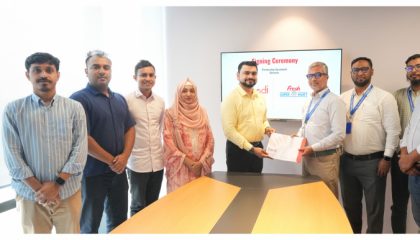
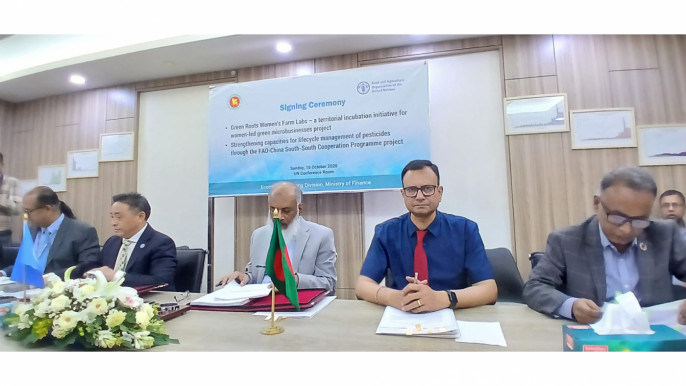
The Economic Relations Division (ERD) and FAO signed the project documents in Dhaka on 18 October. Md Shahriar Kader Siddiky, secretary of ERD under the Ministry of Finance, signed for the government, while Dr Jiaoqun Shi, FAO representative in Bangladesh, signed for FAO.
The ceremony was moderated by AKM Sohel, chief of ERD’s UN Wing. Dr Kazi Shahjahan, joint secretary of the UN Wing, along with representatives of relevant ministries and agencies, attended the event.
Four-year pesticide management programme
One of the projects, titled Strengthening Capacities for Lifecycle Management of Pesticides, will allocate $200,000 to Bangladesh over four years. It is financed by China’s Ministry of Agriculture and Rural Affairs through the FAO–China South-South Cooperation Programme.
The wider programme also includes Ethiopia, Ghana, Jordan and Kyrgyzstan. In Bangladesh, its goal is to improve the way pesticides are regulated, registered, monitored and used throughout their lifecycle.
Planned work includes updating pesticide-related regulations, developing digital registration systems and improving enforcement capacity. The initiative will also seek to strengthen laboratories that test food for pesticide residues and help farmers better understand safe application practices.
The need for stronger safeguards is significant for consumers as well as growers. The project document notes that more than 30% of vegetables in Bangladesh are said to have pesticide residue levels above acceptable limits. Better residue testing, clearer rules and practical farmer awareness can help support safer food systems while reducing avoidable risks in production and handling.
FAO revised the project document after an inter-ministerial meeting held at ERD on 10 June 2026. Under the updated plan, the Ministry of Agriculture will head the Project Task Force. The Bangladesh Agricultural Research Institute will contribute to implementation, and the national project coordinator will be stationed in Bangladesh.
The revised arrangement also rationalises the project budget. Locating coordination within the country is intended to support closer engagement among government bodies, technical institutions and the farming communities expected to benefit from the work.
Support for women-led farm businesses
The second grant-backed initiative is called Green Roots Women’s Farm Labs. Bangladesh will receive $247,000 under the 24-month sub-programme, which is being piloted in Bangladesh and Uganda.
It is designed to help rural women start, improve and grow environmentally friendly micro-businesses connected to agriculture. The programme draws on FAO’s Farmer Field School approach, a practical learning model that brings farmers together to build skills through observation, discussion and field-based activities.
Participants are expected to receive coaching, access to suitable technologies and support in building links with finance providers and markets. These elements matter because a viable small enterprise requires more than production knowledge: entrepreneurs also need tools, capital pathways and dependable buyers for their goods or services.
The Ministry of Agriculture, Department of Agricultural Marketing, Department of Agricultural Extension and Sara Bangla Krishak Society are among the national partners involved in the initiative. Their participation connects the project with institutions working across agricultural production, extension support and market access.
The programme is being introduced during the International Year of the Woman Farmer 2026. Its focus reflects the importance of ensuring that rural women can take part in greener economic activity and gain stronger opportunities to turn agricultural knowledge into income-generating enterprises.
“FAO is pleased to support the Government of Bangladesh in building safer agrifood systems and creating opportunities for rural women.”
Dr Jiaoqun Shi made the remarks during the signing ceremony, highlighting the two projects’ shared emphasis on safer agricultural systems and improved livelihoods.
AKM Sohel described FAO as a trusted development partner for Bangladesh since independence. He said the organisation has invested more than $500 million to strengthen the country’s agriculture sector.
“These projects reflect our shared commitment to safe food, climate-resilient livelihoods and women’s economic empowerment. ERD will continue to facilitate effective coordination so that results reach farmers and rural women.”
Shahriar Kader Siddiky said the projects bring together several priorities that are closely linked in rural development. Safer pesticide practices can contribute to food safety and more responsible production, while women-led green businesses can create new possibilities for household income and local economic participation.
The two programmes are separate in scope, but both depend on coordination between public institutions, technical partners and communities. Their results will be measured not only through policy and project activities, but through whether farmers can use safer practices and whether rural women can build businesses with a realistic path to growth.
Related Reading
Frequently Asked Questions
What is ERD FAO sign 447 000 grant?
ERD FAO sign 447 000 grant is the main topic of this guide. The article explains the context, practical details, and next steps readers should understand.
Why does ERD FAO sign 447 000 grant matter?
ERD FAO sign 447 000 grant matters because readers are looking for a useful answer, not just a short summary. Good content should match search intent and help them decide what to do next.