Poster Campaign in Siliguri Triggers Debate Ahead of Durga Puja
Bdbusinessdaily.com – A campaign encouraging residents to purchase biryani and Durga Puja supplies only from Hindu-owned businesses has stirred sharp debate in Siliguri, West Bengal, in the run-up to the festival season.
Posters appearing in different parts of the city urge people to “Eat biryani at a Hindu shop” and to buy ritual materials from Hindu shops. The campaign has prompted objections from political figures and local residents, who argue that linking food, trade and religious identity risks damaging Bengal’s long-standing culture of social coexistence.
The posters were put up by Hindu Jagaran Manch, an organisation affiliated with the Rashtriya Swayamsevak Sangh. Its members have described the initiative as a request to the public rather than an instruction that people must follow.
Organisers Call It an Economic Appeal
Abhishek Das, a Hindu Jagaran Manch member leading the campaign, said the group intended to encourage support for Hindu-run enterprises while also highlighting local economic activity.
This is not a diktat but an appeal. If people support businesses run by Hindus, it will also impact the local economy.
The distinction between an appeal and a directive has not eased criticism. Opponents say the language of the posters nevertheless invites consumers to make everyday choices based on the faith of shopkeepers, cooks, artisans and sellers.
Left Leaders Seek Action
Asok Bhattacharya, a senior Communist Party of India (Marxist) leader and former minister, called for action against those who displayed the posters. He said such messaging had no place in a secular democracy and urged the administration to respond.
Putting up such posters is a crime in a secular, democratic nation. The administration should not only remove the posters but also arrest those behind this communal campaign.
Left parties have argued that the Constitution protects equal rights irrespective of religious identity. In their view, a person’s faith should not become a factor in determining whether they can earn a livelihood, attract customers or participate in the local marketplace.
A BJP leader said Hindu Jagaran Manch operates independently and rejected suggestions that the ruling party was involved in the poster drive.
Food and Festival Traditions at the Centre of the Dispute
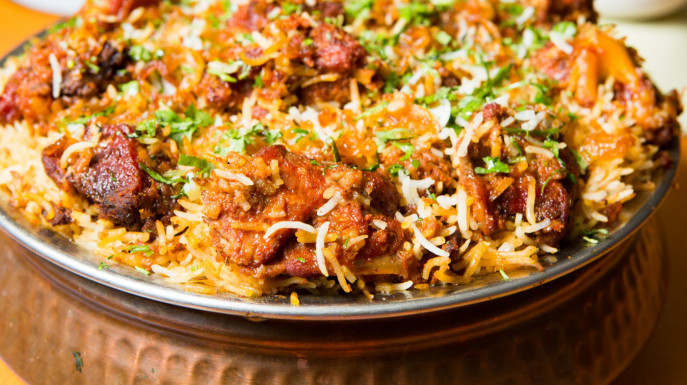
For many residents, the controversy is especially striking because biryani is widely enjoyed across communities in Bengal. Critics of the campaign say people have traditionally eaten the dish without asking about the religion of the person who cooked it or the owner of the establishment serving it.
The timing has also focused attention on the collaborative nature of Durga Puja preparations. The festival is associated with extensive work by artists, decorators, vendors and craftspeople. Residents opposing the posters have noted the contribution of Muslim artisans to the seasonal economy, including the making of shola ornaments used in Puja decorations.
Shola is a lightweight pith material commonly fashioned into decorative pieces. Its use during Durga Puja is one example cited by critics who say the festival’s visual and commercial traditions have long relied on the skills of people from different communities.
Concerns Over Social Harmony
Those challenging the campaign contend that it conflicts with Bengal’s reputation for open cultural exchange and shared public life. They fear that messages asking consumers to favour businesses on religious grounds can transform ordinary purchases into expressions of communal loyalty.
The issue goes beyond biryani or Puja articles. It raises a broader question about whether a customer’s choice should be shaped by the quality, price and service offered by a business, or by the religious background of the people behind it.
Supporters of the campaign frame their message as an effort to strengthen a particular section of local commerce. Its critics, however, see a more divisive outcome: pressure on residents to view traders, food sellers and artisans through a religious lens.
As Durga Puja approaches, the posters have become a focal point in a wider discussion about pluralism, livelihoods and the character of public life in Siliguri. The dispute reflects competing views of community solidarity—one based on religious identity, and another centred on the shared traditions that bring different groups together during Bengal’s most prominent festival season.
Related Reading
Frequently Asked Questions
What is Eat biryani at a Hindu shop?
Eat biryani at a Hindu shop is the main topic of this guide. The article explains the context, practical details, and next steps readers should understand.
Why does Eat biryani at a Hindu shop matter?
Eat biryani at a Hindu shop matters because readers are looking for a useful answer, not just a short summary. Good content should match search intent and help them decide what to do next.