Deployment, Detention and Surveillance at Jantar Mantar
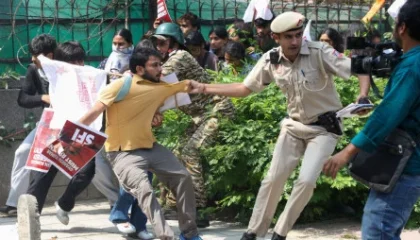
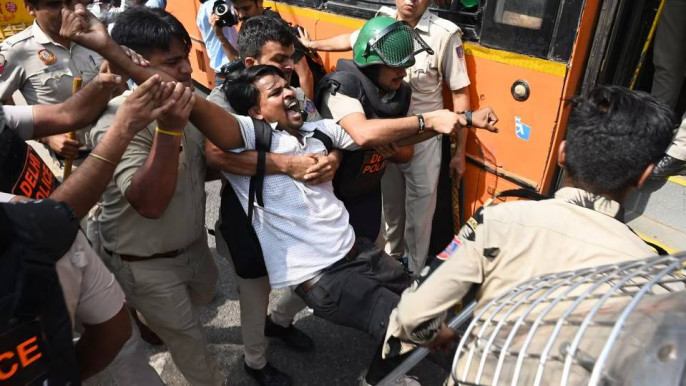
Bdbusinessdaily.com – Deployment, detention and surveillance formed the core of Delhi Police’s operation ahead of the 10 October protest at Jantar Mantar. Police reportedly acted across the capital to stop organisers, supporters, student representatives and journalists from reaching the protest site.
The operation extended beyond Jantar Mantar itself. Some people were detained at Delhi airport, while others were intercepted near their homes, hotels and guest houses. Temporary holding arrangements were reportedly prepared at stadiums, community facilities and police stations in several parts of Delhi.
“The overall supervision was being done by top officials in the Union Home Ministry. The instructions were to ensure there is no repeat of the Jantar Mantar 1.0 protest and to detain protesters wherever they are seen,” an officer said.
The reference was to the Cockroach Janta Party’s month-long protest at the site in July. Rather than relying solely on a visible police deployment around the venue, authorities focused on preventing a similar gathering from taking shape.
Organisers Placed Under Watch
In the days before the protest, police collected addresses, mobile numbers and social-media details of people considered important to the mobilisation. The information was shared with teams assigned to ground monitoring and electronic surveillance.
CJP founder Abhijeet Dipke and co-convenors Saurav Das and Ashutosh Ranka were among those monitored. Activists Yogendra Yadav and Prashant Bhushan, as well as student leaders including Neha Bora, were also under scrutiny.
“Personal details of all important individuals, including CJP and student leaders, such as their residential addresses, mobile numbers and social media accounts, were collected and shared with police teams for electronic surveillance and ground monitoring,” another officer said.
The surveillance reportedly allowed police to track Dipke, Das and Ranka while they were in Mumbai. They were detained after their flight landed in Delhi. Plainclothes officers were also stationed near homes, hotels and guest houses linked to prominent organisers.
Checks at Hotels and Guest Houses
For two to three days before the protest, beat officers visited hotels and guest houses around Delhi. Staff were asked about guests arriving in groups, helping police identify people who might be travelling to join the demonstration.
Independent journalists were among those identified through these checks. Police personnel and vehicles were subsequently positioned outside several accommodation sites. People who left and attempted to travel towards Jantar Mantar were detained in some cases, while others were told to remain indoors to avoid detention.
Account of a Detention
CJP legal head Ratna Singh said she was among the first people detained on Saturday. She said police stopped her near her Jangpura home at about 9am after she returned there, adding that around 20 to 25 personnel had been outside the property since Friday.
“The police personnel blocked our car with their vehicles and told me that I was not allowed to move towards Jantar Mantar. They kept me detained inside their vehicle until 5pm,” Singh said.
Singh said she contacted the police control room and filed a plea at Saket courts seeking an FIR over what she described as illegal detention. The plea was dismissed as defective in form. Her account reflected wider claims that deployment, detention and surveillance were used to restrict movement towards the protest venue.
Frequently Asked Questions
What was the purpose of the police operation? Authorities reportedly sought to prevent a repeat of the earlier month-long Jantar Mantar protest by stopping organisers and participants before they reached the site.
Where were people reportedly stopped? People were reportedly intercepted at Delhi airport, near residences, and outside hotels and guest houses across the city.
How did police identify potential participants? Officers reportedly used address and contact details, social-media monitoring, ground checks and hotel inquiries as part of the operation.