Dhaka and New Delhi Signal Renewed Push for Deeper Bilateral Engagement
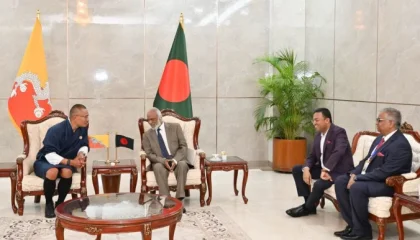
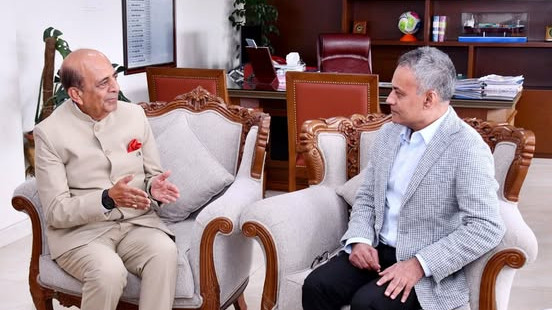
Bdbusinessdaily.com – The diplomatic corridor between Bangladesh and India received a fresh impetus on 8 September when Indian High Commissioner Dinesh Trivedi visited Road Transport and Bridges Minister Shaikh Rabiul Alam at the minister’s office within the Bangladesh Secretariat. The courtesy meeting, which lasted through the day’s official schedule, underscored both governments’ stated intent to elevate their partnership beyond routine protocol and into substantive, people-centred cooperation.
Bangladesh and India share a 4,099-kilometre land boundary and centuries of intertwined cultural, linguistic, and economic history. For decades, however, the relationship has oscillated between periods of warm engagement and stretches of friction over trade imbalances, river-water sharing, transit access, and border-management disputes. The September meeting therefore carries weight beyond its ceremonial framing: it signals that both capitals are attempting to recalibrate the partnership toward sustained, institutionalised collaboration rather than episodic goodwill gestures.
Minister’s Framing: Neighbourhood as Destiny
Shaikh Rabiul Alam opened the conversation by characterising the two nations as neighbours bound by history, geography, and shared civilisational roots. He articulated the Dhaka government’s position that bilateral engagement must progress along a trajectory that is simultaneously positive and productive — language that, in diplomatic parlance, signals a desire to move past symbolic handshakes into measurable joint outcomes.
Bangladesh remains committed to strengthening existing ties so that people in both countries can benefit from greater cooperation.
The minister further insisted that any forward-looking architecture of the relationship must rest on mutual respect and cooperative conduct. This emphasis on reciprocity is notable given that smaller South Asian partners have, at various points, voiced concerns about asymmetry in trade volumes, investment flows, and transit arrangements with their larger neighbour. By foregrounding respect as a precondition, Dhaka is articulating a negotiating posture that seeks parity of voice within the partnership.
New Delhi’s Response: Constructive Momentum
Dinesh Trivedi reciprocated the minister’s overture, stating that India was eager to advance relations in what he described as a positive and constructive manner. The Indian envoy placed the welfare and concrete interests of ordinary citizens in both countries at the centre of the bilateral agenda, suggesting that future policy dialogue would be evaluated not by headline agreements alone but by tangible improvements in livelihood, connectivity, and cross-border mobility.
Bilateral ties would be strengthened by giving priority to the welfare and interests of people in both countries.
Trivedi also drew attention to the deep cultural substrate linking the two nations — shared linguistic traditions, religious festivals, literary and musical exchanges, and the millions of Bangladeshi workers who have built careers in India over successive decades. These people-to-people channels, he noted, constitute a resilient foundation that outlasts any single government’s policy cycle.
Agenda Items and Institutional Follow-Through
Beyond the high-level rhetoric, the two sides reportedly examined a range of issues of mutual interest and explored mechanisms for broadening cooperation in coming months. While the ministry’s public summary did not itemise every topic, the presence of senior secretaries from multiple transport and infrastructure divisions suggests that discussions touched on road connectivity, rail linkages, shipping coordination, and bridges-division projects — areas where Bangladesh has repeatedly sought Indian technical and financial partnership.
The breadth of the Bangladeshi delegation reflected the multi-sectoral nature of the agenda. In attendance were Railways Secretary Md Fahimul Islam, Bridges Division Secretary Mohammad Abdur Rauf, Road Transport and Highways Division Secretary Dr Mohammed Ziaul Haque, and Shipping Ministry Secretary Zakaria. On the Indian side, Deputy High Commissioner Pawan Badhe accompanied the envoy. The joint presence of transport-sector secretaries alongside diplomatic officials indicates that the conversation was intended to translate political goodwill into actionable project-level dialogue.
Why This Meeting Matters in Broader Context
South Asian regional integration has long been hampered by bilateral sensitivities, and the Bangladesh-India axis is arguably the most consequential bilateral pairing on the subcontinent given the scale of shared borders, trade flows, and labour migration. A sustained uptick in cooperation between the two capitals would ripple outward: it would ease transit bottlenecks for landlocked Bhutan and Nepal, stabilise riverine ecosystems through coordinated water management, and create a larger integrated market for goods and services.
At the same time, the emphasis on “mutual respect” and “people-centred” language signals that Dhaka intends to negotiate from a position of equal standing rather than deference. For New Delhi, which has historically framed its neighbourhood policy in terms of strategic outreach, accepting a partner’s insistence on parity of voice represents a meaningful adjustment in tone. Whether the September meeting marks the beginning of a durable recalibration — or merely another cycle of diplomatic optimism followed by implementation gaps — will depend on the follow-through in the months ahead.
For now, both governments have placed their public commitments on record. The question for readers and stakeholders alike is whether the institutional machinery now assembled — from railway secretaries to shipping administrators — will convert the stated intent into contracts, schedules, and completed infrastructure before the next political cycle resets the agenda.
Related Reading
Frequently Asked Questions
What is Shipping minister Indian envoy stress stronger?
Shipping minister Indian envoy stress stronger is the main topic of this guide. The article explains the context, practical details, and next steps readers should understand.
Why does Shipping minister Indian envoy stress stronger matter?
Shipping minister Indian envoy stress stronger matters because readers are looking for a useful answer, not just a short summary. Good content should match search intent and help them decide what to do next.