High Court Set to Hear Challenge Against Blanket Ban on Awami League and Its Network
Bdbusinessdaily.com – A judicial challenge to one of the most sweeping political restrictions imposed in recent Bangladesh history is now before the High Court. A writ petition, confirmed by Deputy Attorney General Nur Mohammad Azmi on 7 September, questions whether a government notification that froze every public activity of the Bangladesh Awami League and its affiliated bodies was issued within the lawful powers of the state. The case, expected to draw close attention from legal circles and political observers alike, pits executive authority against fundamental rights to political expression and association.
The Notification Under Scrutiny
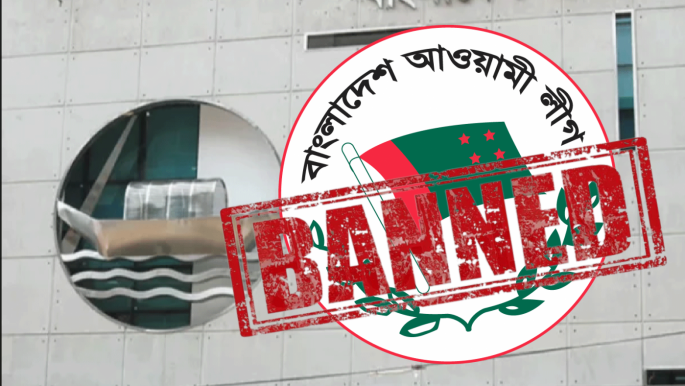
The instrument at the centre of the dispute is a notification dated 12 May 2025, promulgated by the Public Security Division of the Home Ministry. In effect, it declared that all activities of the Awami League, together with its affiliated, associate, and fraternal organisations, would be prohibited until the International Crimes Tribunal completes its trials against the party’s leaders and activists. The scope of the prohibition is broad: it reaches printed publications, media campaigns, online platforms, social-media activity, as well as rallies, meetings, gatherings, and conferences organised by the party or any of its linked bodies.
For a political party that governed Bangladesh for decades before losing power, a total operational freeze of this magnitude raises immediate questions about proportionality, duration, and the legal basis on which such a sweeping restriction can rest. The notification does not target specific acts or specific individuals; it silences an entire organisational ecosystem pending the outcome of criminal proceedings conducted elsewhere.
Who Brought the Case and How It Will Be Heard
The petition was filed by Md Al Amin, a resident of Sreenagar in Munshiganj district. He is represented in court by Advocate Yunus Ali. The writ is scheduled for hearing before a two-judge bench of the High Court comprising Justice JBM Hasan and Justice Aziz Ahmed Bhuiyan.
In seeking judicial intervention, Al Amin has asked the court to issue a rule — the preliminary step in a writ proceeding — directing the government to explain why the 12 May 2025 notification should not be declared to have been issued without lawful authority. In parallel, he has requested a stay order that would suspend the operation of the notification pending the court’s final disposition of the rule. If granted, such a stay would effectively lift the ban while the case is argued, restoring the party’s ability to publish, campaign, and convene meetings.
What a Writ Petition Does in This Context
A writ petition before the High Court is a direct mechanism by which any person can challenge the legality of a government action or omission. The petitioner need not be a member of the affected party; standing is generally available to any citizen who can demonstrate a sufficient interest in the question. Here, Al Amin, a Munshiganj resident, invokes that broader standing to test whether the Home Ministry’s Public Security Division possessed the statutory competence to issue a notification of such breadth and duration.
The core legal question the bench will confront is whether the executive may, through a single administrative notification, impose an indefinite operational ban on a political party and its entire organisational network, tying the lifting of that ban to the conclusion of criminal trials before a specialised tribunal. Opponents of the notification would argue that such a measure exceeds the scope of any enabling statute and infringes constitutional guarantees of political association and free expression. The government, in turn, would be expected to point to specific statutory provisions authorising the restriction and to demonstrate that the measure is proportionate to a legitimate aim.
The International Crimes Tribunal Dimension
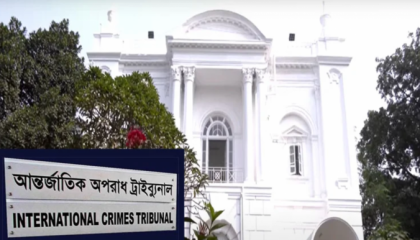
The notification explicitly conditions the ban on the completion of trials before the International Crimes Tribunal, a judicial body established to try cases of genocide, crimes against humanity, war crimes, and other international crimes committed during periods of political upheaval in Bangladesh. Linking a political party’s right to operate to the outcome of such trials creates a direct nexus between ongoing criminal proceedings and the party’s civil and political existence in the public sphere. Critics of the linkage contend that a party’s right to organise and speak does not ordinarily depend on the verdicts in cases against its individual leaders, while supporters maintain that the measure is a necessary safeguard during an active judicial process.
Broader Implications
Whatever the court ultimately decides, the case will set a precedent on how far executive power may extend in restricting the organisational life of a political party. A ruling upholding the notification would confirm that the state may impose a total operational freeze on a party pending the conclusion of criminal trials against its leadership. A ruling striking it down would reinforce the principle that political association and expression cannot be suspended wholesale by administrative fiat, even where leaders of the party face serious criminal charges.
For millions of Bangladeshis who identify with the Awami League or its affiliated bodies, the outcome will determine whether their political voice remains muted in the public square while tribunal proceedings continue. For the government, the decision will shape the boundaries of executive authority in managing political life during periods of judicial scrutiny. The High Court bench of Justice JBM Hasan and Justice Aziz Ahmed Bhuiyan thus carries a matter of considerable constitutional weight as it prepares to hear the rule.
Related Reading
Frequently Asked Questions
What is Writ petition challenges ban on activities?
Writ petition challenges ban on activities is the main topic of this guide. The article explains the context, practical details, and next steps readers should understand.
Why does Writ petition challenges ban on activities matter?
Writ petition challenges ban on activities matters because readers are looking for a useful answer, not just a short summary. Good content should match search intent and help them decide what to do next.