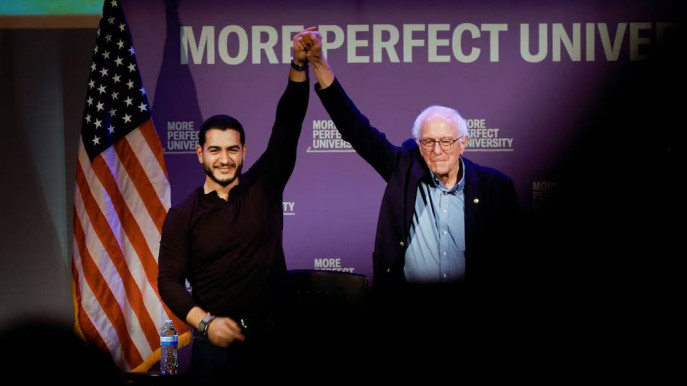
Michigan Senate Race Tests Attacks on Muslim Candidate and Progressive Agenda
Bdbusinessdaily.com – The Michigan Senate race a test of attacks on a Muslim candidate and the appeal of progressive politics will be decided on 3 November. Republican Mike Rogers and Democrat Abdul El-Sayed are competing for an open seat that could influence control of the US Senate and shape national political debates.
Republicans hold a 53-47 Senate advantage, making every competitive contest important. Michigan is considered too close to call by independent analysts. The RealClearPolitics polling average shows El-Sayed leading by 2.5 percentage points, even though Donald Trump carried Michigan by 1.4 points in 2024.
If elected, El-Sayed would become the first Muslim member of the US Senate. His campaign has drawn sharp criticism from Rogers, who has argued that the Democrat represents a radical political agenda and is outside the mainstream.
Religion and identity take centre stage
Rogers has sought to link El-Sayed to the Muslim Brotherhood, an Islamist movement with roots across the Arab world. The Trump administration designated branches of the organisation as terrorist groups this year. El-Sayed has rejected the group and said he has no relationship with it.
The Republican campaign has highlighted a 2012 letter signed by El-Sayed and other Egyptian Americans supporting Mohamed Morsi after his election as Egypt’s president. Morsi was backed by the Muslim Brotherhood. The letter called for the removal of remnants of the former dictatorship from media institutions and security agencies after the Arab Spring uprising.
El-Sayed’s campaign did not immediately respond to questions about the letter. He has denied supporting extremism, while supporters say efforts to portray him as dangerous because he is Muslim are Islamophobic.
“He’s a Muslim-American, and so Rogers is attempting to do his best to portray El-Sayed as an outsider who’s dangerous,” said Jonathan Hanson, a political scientist and public policy lecturer at the University of Michigan.
Observers say the attacks may be intended to weaken El-Sayed’s support among Jewish and Black voters in the Detroit area, including people who supported Representative Haley Stevens in the Democratic primary. In a closely divided state, turnout and coalition-building could prove decisive.
Trump has amplified the criticism, falsely describing El-Sayed as a Muslim extremist. At a Sunday rally attended by Rogers, Trump compared him with the 11 September attackers and said he wanted to prevent a “jihadist” from entering the Senate. Earlier in the month, Rogers endorsed a social-media post calling El-Sayed a terrorist.
Abby Ronson, a spokesperson for Rogers’ campaign, pointed to his appearance on NBC News’ Meet the Press. Rogers said his criticism was not directed at Islam, but at what he described as El-Sayed’s “radical Islamic agenda.”
Progressive politics face a Michigan test
The Michigan Senate race a test of political identity is also a measure of the Democratic Party’s ideological direction. At 41, El-Sayed is a prominent progressive who supports limits on corporate power, a larger social safety net and universal healthcare. He has focused his campaign on reducing costs for working-class families.
Although opponents have called him a socialist, El-Sayed describes himself as a capitalist. A victory could strengthen progressive Democrats seeking greater influence before the 2028 presidential race. A defeat could encourage critics who argue that progressive candidates face difficulty in highly competitive states.
“If El-Sayed wins by a couple of points but trails Democratic gubernatorial nominee Jocelyn Benson by a wide margin, that won’t be a very convincing argument,” Michigan State University political scientist Matt Grossmann said. “And if El-Sayed were to lose, then it would be a mark against that faction of the party.”
The margin may matter almost as much as the winner. A narrow El-Sayed victory would show he can build a statewide coalition, but it may not resolve questions about how broadly popular progressive policies are with general-election voters.
What Michigan voters should watch
Rogers has presented himself as a practical conservative while maintaining ties to Trump, whose support remains important to many Republican voters. El-Sayed must hold together a diverse Democratic coalition while responding to attacks focused on religion, foreign policy and ideology.
The Michigan Senate race a test of campaign strategy will therefore extend beyond one seat. Its outcome could affect Senate control, the future of progressive Democrats and the political consequences of identity-based attacks in a major battleground state.
Michigan Senate Race FAQ
When is the Michigan Senate election?
Michigan voters are scheduled to choose their next senator on 3 November.
Who are the main candidates?
Republican Mike Rogers is running against Democrat Abdul El-Sayed for the open Senate seat.
Why is this race important nationally?
The contest could help determine control of the US Senate. It is also being closely watched for what it may reveal about progressive politics and attacks targeting a Muslim candidate.
What should Michigan voters consider before voting?
Voters can compare the candidates’ positions on healthcare, household costs, corporate power, public safety and other local priorities, while reviewing reliable election information from Michigan election officials.
Related Reading
Frequently Asked Questions
What is Michigan Senate race a test of attacks?
Michigan Senate race a test of attacks is the main topic of this guide. The article explains the context, practical details, and next steps readers should understand.
Why does Michigan Senate race a test of attacks matter?
Michigan Senate race a test of attacks matters because readers are looking for a useful answer, not just a short summary. Good content should match search intent and help them decide what to do next.