Protests Against Major Hydropower Schemes Intensify in Arunachal Pradesh
Bdbusinessdaily.com – Opposition to large hydropower projects in Arunachal Pradesh widened on 26 October as violence erupted in Daporijo during a 12-hour shutdown in Upper Subansiri district. Demonstrators damaged vehicles and equipment belonging to the National Hydroelectric Power Corporation (NHPC), while two security personnel were injured.
The unrest marked an expansion of anti-dam activity from the Siang River basin into the Subansiri valley. Daporijo, situated about 220 kilometres by road west of Pasighat, became the latest centre of anger over proposed projects that residents and community organisations fear could reshape their land, livelihoods and future.
Damage During Upper Subansiri Shutdown
The bandh was called by the All Tagin Students’ Union along with other organisations opposing the Menga dam. The scheme forms part of the proposed 1,605MW Subansiri Upper Hydroelectric Project.
During the strike, an NHPC vehicle, company equipment and two police vehicles were damaged. Police later carried out a flag march through Daporijo, urging residents to remain calm and avoid further confrontation.
The incident added to concern over a growing regional movement against major dam construction. While the immediate focus in Upper Subansiri was the Menga dam proposal, the protest reflected broader anxieties shared by groups in several river valleys across the state.
Siang Project Remains at the Centre of Regional Tension
The latest violence came only three days after serious protests in Pasighat over the proposed Siang Upper Multipurpose Project. That project is planned as an 11,200MW development, with its principal reservoir proposed near Geku village, roughly 35 kilometres downstream from Yingkiong, the headquarters of Upper Siang district.
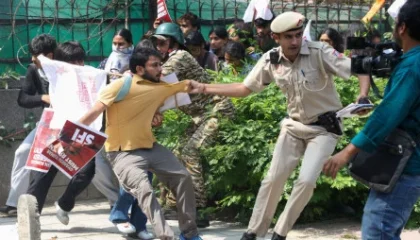
From Friday night into early Saturday, protesters surrounded the East Siang district headquarters in Pasighat. The confrontation involved arson, vandalism and clashes with security forces, highlighting the depth of resistance among groups challenging the project.
Student bodies and community organisations from the Subansiri basin have backed the agitation around the Siang proposal. Their concerns centre on the potential effect of a huge reservoir and associated infrastructure on land, economic activity and the prospects of communities living in the region.
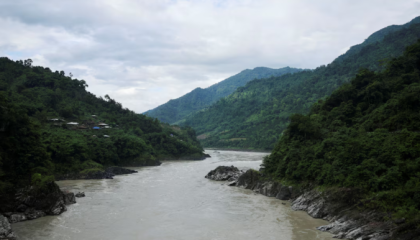
The Siang is especially significant because it is part of a much larger river system. It enters Arunachal Pradesh from Tibet and later joins other Indian rivers and tributaries before becoming known as the Brahmaputra. The river then crosses Assam and eventually flows into Bangladesh. Debate over dam construction in Arunachal Pradesh therefore carries importance beyond a single district, given the river’s connection to downstream areas.
Demands From Protesters
Tensions continued in Upper Siang after the Pasighat unrest. Protesters demanded the release of people arrested in connection with the violence, as well as four activists held under preventive detention.
They also called for federal security forces to be withdrawn and for the pre-feasibility survey for the Siang project to stop immediately. The project has been viewed as India’s response to a major dam being built in Tibet, adding a strategic dimension to an already sensitive local dispute.
Upper Siang District Commissioner Ashok Tajo said authorities were examining the cases of those detained. He indicated that any release would require additional approvals.
A Conflict Between Development Plans and Local Fears
The protests reveal the difficult balance surrounding hydropower expansion in Arunachal Pradesh. Large projects are designed around the state’s river systems and their considerable generating potential, yet local opposition has focused on what communities believe may be lost if major dams proceed.
For people participating in the demonstrations, the issue is not confined to electricity generation figures or engineering plans. Their objections are tied to land, daily livelihoods and long-term security for future generations. These concerns have enabled groups from different areas to find common cause, even where the projects under discussion are located in separate river basins.
The spread of the agitation from the Siang basin to the Subansiri valley suggests that decisions around one project may influence public reaction to others. It also places pressure on authorities to manage public order while addressing demands linked to detention, security deployment and the continuation of surveys.
For now, the proposed Siang and Subansiri developments remain closely watched in Arunachal Pradesh. The damage in Daporijo and the earlier confrontations in Pasighat show that opposition has moved beyond isolated objections, becoming a wider test of how major infrastructure plans are discussed with the communities most directly affected.
Related Reading
Frequently Asked Questions
What is Anti dam protest spreads in Arunachal?
Anti dam protest spreads in Arunachal is the main topic of this guide. The article explains the context, practical details, and next steps readers should understand.
Why does Anti dam protest spreads in Arunachal matter?
Anti dam protest spreads in Arunachal matters because readers are looking for a useful answer, not just a short summary. Good content should match search intent and help them decide what to do next.