Constitutional Committee Considers New Models for Caretaker Government
Bdbusinessdaily.com – Bangladesh’s Special Committee on Constitutional Amendment is examining several possible ways to structure a future caretaker government, with proposals ranging from a role for an upper chamber of parliament to appointing a Speaker or Vice-President to lead an interim administration.
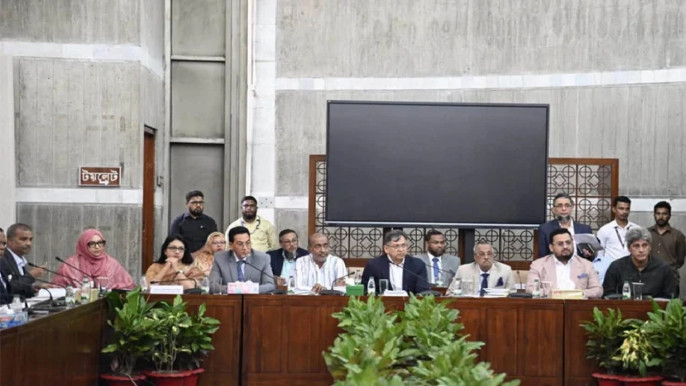
Home Minister Salahuddin Ahmed, who chairs the committee, outlined the ideas after its eighth meeting at the National Parliament Building on 24 October. The discussions brought together constitutional specialists, Supreme Court lawyers and university law teachers to consider proposed amendments and the implementation of the July National Charter.
A central question before the committee is how an interim administration could be formed through a process that commands confidence across parliament. Experts explored whether an upper chamber could be involved in selecting or supporting a caretaker government, and whether such a mechanism should be explicitly written into the Constitution.
Speaker and Vice-President Among Suggested Options
One proposal would create a Vice-President’s post in circumstances where an upper chamber remains in place or where a bill is not passed during the same parliamentary term. Another idea would place a Speaker at the head of the caretaker government, provided that person had been elected with the agreement of both governing and opposition parties.
The suggestions are intended to identify an interim leadership arrangement that has broader institutional backing. They also reflect concern over defining the process clearly in advance, rather than leaving a major constitutional transition to uncertainty.
“Setting aside the President’s last option, how a caretaker government can be formed based on the consent of the House is an important consideration,” Salahuddin said.
He said putting the method for establishing a caretaker government into written constitutional provisions would be useful. The committee has asked participants to submit their views and expects the range of options to become clearer as those opinions are assessed.
“We have requested everyone to give their opinions on the process of forming a caretaker government. Once we receive their views, we will be able to develop a clearer idea,” he added.
The committee will weigh the proposals while drafting its report. Salahuddin said further alternatives could arise during the continuing consultation process.
Broader Debate on Parliamentary and Judicial Reform
The caretaker government issue was part of a wider examination of constitutional reform. The meeting took place in the Cabinet Room of the National Parliament Building under Salahuddin’s chairmanship, with 44 of the invited experts attending. Participants presented written submissions as well as oral observations on proposed changes to the Constitution.
Debate covered the Constitution’s fundamental structure, judicial review and the independence of the judiciary. These areas are closely linked to the wider reform agenda because they concern how authority is distributed, how constitutional limits are interpreted and how public institutions operate independently.
Participants also considered a proposed amendment to Article 70. The proposal would allow members of parliament greater freedom to state their views and vote independently on matters outside four specified categories: confidence motions, money bills, constitutional amendments, and national security or wartime issues.
Such a change would affect the way parliamentary debate functions by distinguishing between issues considered essential to government stability and other matters where legislators could be permitted to take individual positions. The discussion remained focused on the constitutional design of the proposal rather than on a final decision.
Balance of Power and Institutional Independence
Other topics included maintaining an appropriate balance between the President and the Prime Minister, introducing legislation for the appointment of judges and creating a Supreme Court Secretariat. The committee also discussed defining the independent working scope of statutory bodies.
These matters form part of a broader effort to clarify how major state institutions should relate to one another. A constitutional framework for appointments, oversight and institutional responsibilities can determine how effectively different branches and bodies carry out their functions.
The possible involvement of an upper chamber in a caretaker government system was discussed alongside another parliamentary proposal: nominating opposition representatives as chairpersons of parliamentary standing committees under Article 76 of the Constitution. Both subjects concern the role of opposition participation and institutional checks within parliamentary practice.
Those attending included Jatiya Sangsad Chief Whip Nurul Islam Moni; Law Minister Md. Asaduzzaman; Joynul Abedin, chairman of the Parliamentary Standing Committee on the Ministry of Home Affairs; State Minister for Planning Md. Zunaid Abdur Rahim Saki; State Minister for Land Mir Mohammed Helal Uddin; State Minister for Social Welfare Farzana Sharmin; and MP Shakila Farzana.
No single model for a caretaker administration was adopted at the meeting. Instead, the committee’s deliberations indicated that the future structure, size and authority of such a government remain under active review as constitutional experts and political representatives continue to offer proposals.
Related Reading
Frequently Asked Questions
What is Multiple proposals emerge on caretaker govt?
Multiple proposals emerge on caretaker govt is the main topic of this guide. The article explains the context, practical details, and next steps readers should understand.
Why does Multiple proposals emerge on caretaker govt matter?
Multiple proposals emerge on caretaker govt matters because readers are looking for a useful answer, not just a short summary. Good content should match search intent and help them decide what to do next.