Subject Expertise Gap Raises Fresh Concerns for Secondary Education
Bdbusinessdaily.com – Bangladesh’s secondary schools face a major shortage of teachers with advanced academic qualifications in the subjects they teach, particularly English and mathematics. The gap has raised concerns about classroom quality, student learning and the long-term ability of schools to strengthen performance in two subjects that are central to further study and employment.
Bangladesh Education Statistics 2025 shows that only 12,893 of 64,253 secondary-level English teachers have honours or master’s degrees in English. The situation is even more severe in mathematics: just 9,918 of 67,697 mathematics teachers hold higher degrees in that discipline.
In practical terms, nearly four in five English teachers lack an advanced degree in English, while more than 85% of mathematics teachers do not have equivalent higher qualifications in mathematics. The figures point to a longstanding mismatch between teacher preparation and subject assignments in many institutions.
Training Levels Have Also Declined
The shortage of subject specialists comes alongside a fall in professional training among teachers. Bangladesh Bureau of Educational Information and Statistics data shows that the share of trained teachers declined from roughly 73% in 2013 to 59.48% ten years later. That represents a decrease of 13.52 percentage points.
Subject knowledge and classroom training serve different but connected purposes. A teacher may understand a topic deeply but still need pedagogical preparation to explain it clearly, assess learning and support pupils with different needs. When both subject specialisation and professional training are limited, the pressure on classroom teaching becomes greater.
Educationist Rasheda K Choudhury, executive director of the Campaign for Popular Education and a former caretaker government adviser, said teachers need strong command of their subjects to teach effectively. Without that foundation, she said, some teachers become overly dependent on guidebooks.
If a teacher does not have advanced knowledge of the subject they teach, they cannot be expected to teach it well. This is why teachers have to rely on guidebooks.
She called for action on two fronts: appointing new teachers who have relevant academic backgrounds and improving the skills of teachers already working in schools. She said educated young people could receive training before joining institutions as subject specialists, while schools should move away from dependence on what she termed the “guidebook syndicate”.
Schools Often Work Around Staffing Shortages
The mismatch is visible at the school level. Majeda Mujib, a teacher at Tejgaon School and College, holds honours and master’s degrees in Bangla literature but teaches history. She said her pupils had performed exceptionally well in examinations, yet the institution had repeatedly requested a mathematics teacher from the Directorate of Secondary and Higher Education without receiving one.
As a result, physics teachers have also had to take mathematics classes. Such arrangements may help schools keep classes running, but they also show how staff shortages can push teachers beyond their main areas of academic preparation.
A similar experience was described by a teacher at Gauripur High School in Natore, who asked not to be identified. Although he has a master’s degree in political science, he has taught English for years. He said he invested considerable time in independent study to prepare himself for the work and noted that his students had achieved good results.
I had to study English intensively on my own for a long time to teach the subject. The students are doing well. Had I held a relevant degree, teaching might have been somewhat easier.
These examples illustrate that committed teachers can support students even outside their formal discipline. However, individual effort cannot fully replace a system that consistently places qualified teachers in the subjects for which they were trained.
Recruitment Practices Are Shifting Toward Specific Subjects
Syed Akhtaruzzaman, chairman of the Dhaka Secondary and Higher Secondary Education Board, linked part of the problem to older recruitment practices. Teachers were once recruited for broad academic groups rather than for individual subjects, meaning a teacher appointed under the science group was not necessarily trained in mathematics.
Graduates with BSc degrees could be assigned subjects beyond their strongest areas, while science teachers were often expected to cover several disciplines. Akhtaruzzaman said recruitment should now focus on specific subjects if schools are to improve educational quality.
If we want to ensure quality education, we should recruit teachers for specific subjects.
Some institutions have already adopted a more specialised approach. Majeda Begum, principal of Viqarunnisa Noon School and College, said about 80% of teachers there teach subjects in which they hold higher degrees. The remaining teachers work within their relevant academic groups.
At Dhaka Residential Model College, mathematics teacher Anadinath Mondal said classes are generally assigned to teachers who specialise in the relevant discipline. Although he sometimes explains science topics he knows well, the institution’s usual practice is to match teachers with their areas of expertise.
Student Results Highlight the Challenge
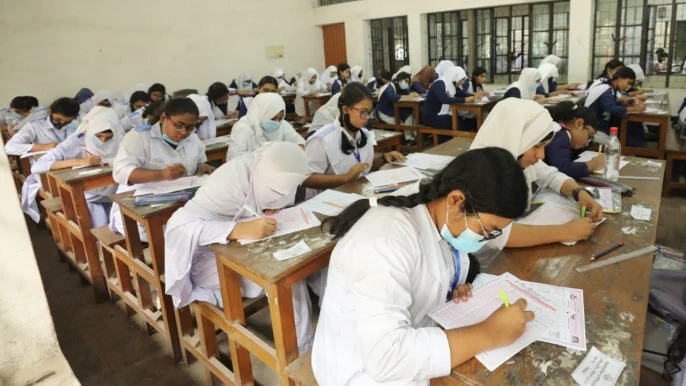
The need for stronger teaching in English and mathematics is also reflected in recent examination outcomes. Results from the 2026 Secondary School Certificate and equivalent examinations showed that several education boards outside Dhaka had higher failure rates in these two subjects than the capital.
In Mymensingh, 33.36% of students failed English and 30.39% failed mathematics. These results do not establish a single cause for weaker performance, but they underline the importance of sustained attention to subject teaching, teacher deployment and professional development.
Educationist Manzoor Ahmed stressed that subject-based recruitment alone would not solve the problem. He said teachers also need proper professional training, describing the shortage of qualified staff and insufficient training opportunities as a serious weakness. He added that the absence of a coherent plan to address the issue demands greater policy focus.
For students, English and mathematics are more than examination subjects. They shape access to higher education, communication skills, scientific learning and many future career paths. Ensuring that every classroom has a well-prepared teacher in these areas would require both better recruitment and meaningful support for the educators already serving across the country.
Related Reading
Frequently Asked Questions
What is 4 out of 5 secondary English?
4 out of 5 secondary English is the main topic of this guide. The article explains the context, practical details, and next steps readers should understand.
Why does 4 out of 5 secondary English matter?
4 out of 5 secondary English matters because readers are looking for a useful answer, not just a short summary. Good content should match search intent and help them decide what to do next.