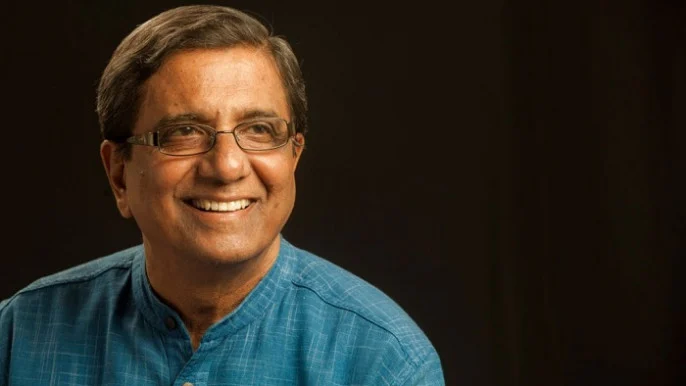
Matiur Rahman Calls for Action on Press Freedom Commitments
Bdbusinessdaily.com – Prothom Alo Editor and Publisher Matiur Rahman has urged the BNP government to turn its election promises on media freedom into concrete reforms, arguing that Bangladesh’s press continues to face pressure despite changes in political power.
Speaking on 4 October at a Bay of Bengal Conversation session titled “Journalism After the Turning Point,” Rahman said commitments contained in the BNP’s 31-point reform plan and election manifesto had yet to produce meaningful change for newspapers or the wider media industry.
Those commitments included establishing a media commission, repealing restrictive legislation and safeguarding fearless, impartial journalism. Rahman said the pledges were significant, but implementation remained limited.
“Despite this commitment by BNP as a political party and by the government, no significant steps have yet been taken to reform the newspaper and the broader media sector,” he said.
Pressure across successive administrations
Rahman described press freedom as an unresolved issue that has persisted through different governments. He criticised the former Awami League administration, led by Sheikh Hasina, as well as the interim administration that followed it, saying neither created the reform environment expected by journalists and the public.
During the Awami League’s time in office, he said journalists were subjected to sustained pressure and imprisonment. Prothom Alo, he added, faced a range of efforts intended to weaken its ability to operate independently.
Rahman alleged that advertising from 50 major companies was stopped after government instructions, a move he said was aimed at putting the newspaper under financial strain. He also said nearly 80 cases had been filed against him, including a Digital Security Act case in 2023.
He recalled that Sheikh Hasina had called Prothom Alo an “enemy” of both the Awami League and the country during a parliamentary speech. Rahman also alleged that military intelligence placed intense pressure on the newspaper’s management before the 2024 uprising, seeking his removal and a shift in ownership.
“I believed that if the government had remained in power for a few more months, control of Prothom Alo’s management could have been taken away,” he said.
The remarks underline a broader concern for media organisations: editorial independence can be affected not only by criminal cases and direct restrictions, but also by commercial pressure, ownership disputes and threats against newsroom leadership.
Interim period and attacks on newspaper offices
Rahman said the interim government did not meet expectations for media reform. Instead, he said instability spread across the industry as pressure from different groups contributed to management changes at media outlets and left many journalists without work.
He argued that uncertainty created an environment in which news organisations increasingly avoided sensitive reporting. Prothom Alo, he said, was among the outlets affected by the resulting climate of fear and self-censorship.
Rahman further said the interim administration made almost no effort to carry out recommendations put forward by the Media Reform Commission. For advocates of a freer press, he suggested, the failure to act on those proposals left a major gap between public expectations and government policy.
He also criticised the official response to attacks on the offices of Prothom Alo and The Daily Star on 18 December 2025. Rahman said extremist groups had fuelled protests and what he described as hateful propaganda before the violence escalated into arson and destruction at the two newspaper offices.
“Only after everything had been burned down and destroyed did the law enforcement agencies clear the way for the fire service,” he said.
He alleged that authorities did not issue effective directions to stop the destruction. The episode, he said, raised urgent questions about whether media institutions can rely on protection when they are threatened because of their reporting or editorial positions.
Past experience under BNP governments
Rahman contrasted these experiences with the freedom he said he had while editing Bhorer Kagoj and Prothom Alo during the BNP governments led by Khaleda Zia between 1991 and 1996 and again from 2001 to 2006.
He said he had considerable room to work during those periods, even though his newspaper was strongly critical of the 2001-2006 government. In his account, the paper did not face major legal harassment despite its reporting and commentary.
Rahman said he had engaged in heated exchanges with Khaleda Zia and with her son, Tarique Rahman, who is now prime minister, without retaliation. That history formed the basis of his call for the current BNP administration to honour the standards it has publicly endorsed.
For a government that has promised institutional reforms, progress on media laws and safeguards would carry practical importance beyond individual newspapers. Clearer protections could affect how journalists investigate public institutions, how editors make publishing decisions and whether criticism of those in power can be expressed without intimidation.
A demand that has endured for decades
Rahman placed the present debate within a much longer personal and national history. He recalled joining a student protest against the Ayub Khan regime on 1 February 1962, when demonstrators demanded press freedom.
More than six decades later, he said, the same core demands remain unresolved. The continuing need to argue for the right to speak freely shows why legal reform alone may not be enough unless it is matched by a political culture that accepts independent scrutiny.
“After 64 years, we still have to speak about those demands. We still have to ask for them. We still have to remind those in power that the right to speak and freedom of the press are not privileges. They are fundamental rights,” he said.
“After 56 years of journalism, I find myself standing in the same place once again,” he added.
Rahman’s message was directed at the current government, but its wider implication was that a durable press freedom framework must outlast individual administrations. For Bangladesh’s media sector, the test will be whether promises of reform lead to enforceable protections for journalists, editors and independent news organisations.
Related Reading
Frequently Asked Questions
What is Govts changed but fight for press?
Govts changed but fight for press is the main topic of this guide. The article explains the context, practical details, and next steps readers should understand.
Why does Govts changed but fight for press matter?
Govts changed but fight for press matters because readers are looking for a useful answer, not just a short summary. Good content should match search intent and help them decide what to do next.