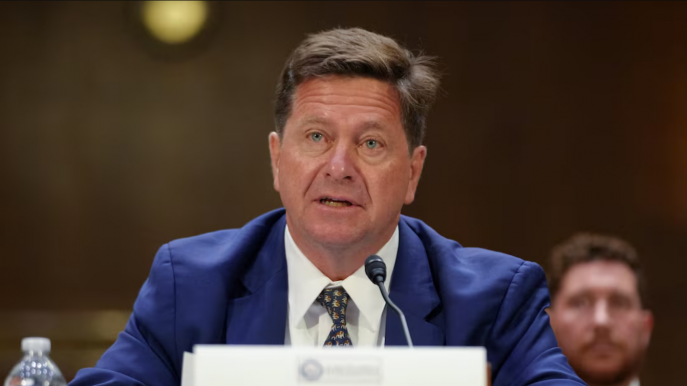
Trump taps Jay Clayton to lead new White House AI task force
Bdbusinessdaily.com – President Donald Trump has selected Director of National Intelligence Jay Clayton to coordinate the administration’s approach to artificial intelligence, placing him at the head of a new White House task force focused on the technology’s potential benefits and threats.
Clayton, who became intelligence chief in August, will serve as the administration’s AI czar while leading the panel. The group has been given 120 days to examine how artificial intelligence could affect the United States and to present recommendations for strengthening the federal response.
The initiative reflects the growing pressure on Washington to address a technology that is advancing rapidly across business, government, science and everyday life. AI systems can assist with research, automation and decision-making, but their expansion has also raised concerns involving cybersecurity, misuse, safety and national competitiveness.
A focus on leadership and national interests
The administration calls the new body the “Super Intelligence Force.” Its central mission is to help maintain US leadership in advanced AI while safeguarding the interests of Americans.
The president asked that a group be put together.
Clayton stressed the importance of moving quickly as international competition intensifies.
The risk of not being first is high.
Trump has generally favored a restrained regulatory approach to artificial intelligence. He has argued that overly burdensome rules could reduce the country’s ability to compete with China, where AI development is also treated as a strategic priority. Earlier in the week, Trump said he did not want to work with Chinese President Xi Jinping on establishing governance for AI technology.
The administration’s position places a strong emphasis on maintaining an edge in innovation while using existing federal powers to manage emerging risks. That balance is likely to shape the task force’s work as it considers where government action may be needed without creating barriers that could slow development.
Reviewing risks, breaches and federal readiness
The panel will assess AI-related dangers and examine how the government currently receives information about breaches, intrusions, hacks and other incidents involving the technology. It will also consider whether federal agencies can respond more effectively under authorities they already possess.
That focus makes the assignment particularly relevant to Clayton’s role as director of national intelligence. AI can affect national security in several ways, including through cyber operations, intelligence analysis, automated systems and the protection of sensitive information. At the same time, government agencies must consider how rapidly developing AI tools could be abused by criminals, hostile actors or others seeking to exploit vulnerabilities.
Recent debate over AI safety has become more urgent. Some researchers have warned that the people developing advanced systems believe the technology could pose an existential threat to humanity within the next decade. Those warnings have prompted concern from lawmakers in both major parties, with Democrats and Republicans calling for greater attention to the issue.
The task force’s role does not appear limited to identifying problems. Its work is also expected to consider opportunities created by AI and the steps needed to ensure the United States can benefit from them. This means the panel will have to weigh security and safety questions alongside economic, technological and strategic concerns.
Senior officials join the panel
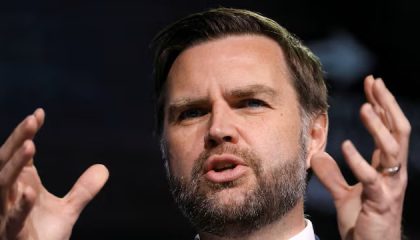
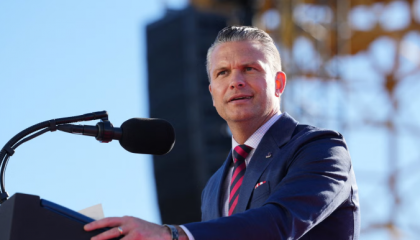
Emil Michael, Scott Kupor and Federal Trade Commission Chair Andrew Ferguson will serve as vice chairs of the task force. Its membership will include Vice President JD Vance, Defence Secretary Pete Hegseth, Treasury Secretary Scott Bessent and White House Chief of Staff Susie Wiles.
The presence of officials from the White House, defence, treasury, intelligence and consumer-protection spheres suggests that the administration sees AI as an issue extending well beyond a single agency. Decisions involving artificial intelligence can touch national security, financial systems, consumer protection, industrial policy and the broader economy.
External advisers will include venture capitalist David Sacks and former Secretary of State Condoleezza Rice. Sacks previously held the AI czar position during the opening phase of Trump’s second term, making Clayton the second adviser chosen to oversee AI-related decisions across the administration.
By assigning the task force a defined 120-day deadline, the White House has created a relatively short period for senior officials and advisers to map the government’s existing capabilities and identify gaps. The recommendations could influence how federal agencies share information, handle AI-related incidents and coordinate policy during a period of intense technological change.
For businesses, researchers and the public, the panel’s eventual conclusions may offer a clearer picture of how the administration intends to pursue AI leadership while responding to risks. The task will be difficult: policymakers must address concerns about security and safety without losing sight of the competition to develop and deploy increasingly powerful systems.
Related Reading
Frequently Asked Questions
What is Trump names intelligence chief Clayton as AI?
Trump names intelligence chief Clayton as AI is the main topic of this guide. The article explains the context, practical details, and next steps readers should understand.
Why does Trump names intelligence chief Clayton as AI matter?
Trump names intelligence chief Clayton as AI matters because readers are looking for a useful answer, not just a short summary. Good content should match search intent and help them decide what to do next.