Radda’s Destruction Tests Bangladesh’s Commitment to Public Service
Bdbusinessdaily.com – Before dawn on 25 September, a health centre that had served families in Mirpur-1 for roughly half a century was reduced to debris. More than 200 masked intruders reportedly entered the Radda MCH-FP Centre shortly after midnight, restrained its security guards, removed essential equipment and supplies, and brought in an excavator to demolish the premises.
Vaccines, ultrasound equipment, medicines and computers were taken. By morning, the facility had been flattened and a different organisation’s signboard had appeared at the entrance. The immediate material loss is estimated at more than Tk1 crore, but the damage reaches far beyond property.
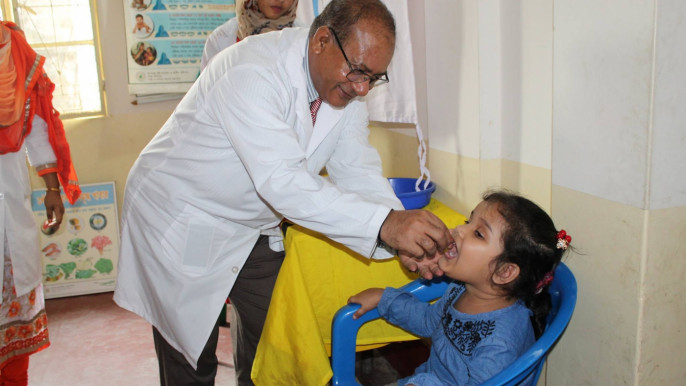
Radda’s work concerned some of the people least able to absorb a disruption in care: pregnant women, mothers and children. Its stolen immunisation records and tablet system enabled staff to identify children due for vaccines and contact parents with reminders. Records relating to expectant mothers also disappeared. Missed information can translate into missed vaccine doses, postponed check-ups and broken continuity of care.
A changing neighbourhood and an enduring service
Mirpur, in northwestern Dhaka, has undergone a profound transformation. For many years it was among the city’s poorest areas, with dense settlements of families displaced or impoverished after the 1971 war and the 1973 famine. It is now a place where lower-income residents live beside a growing, more prosperous population. As that change has accelerated, land in the area has become increasingly valuable.
That context makes the attack on Radda especially troubling. The institution was not a speculative project or a short-lived charity. It developed from a maternal and child health programme funded by Sweden from 1974. In 1994, after the government had previously been asked to assume responsibility for the programme but concluded in 1983 that it could not do so, Sweden’s ambassador approached Kazi Fazlur Rahman for assistance.
Rahman, recently retired from the Planning Commission and the Economic Relations Division, took on the challenge of preventing the programme’s closure when overseas funding ended. He brought together a team, established Radda as a Bangladeshi trust, and pursued a model intended to keep vital health services available without permanent dependence on donors.
Building sustainability around care
The organisation’s approach was practical. Its team introduced clearer operating rules, reduced unnecessary spending and sold its vehicle fleet. It also focused on creating a financially viable institution rather than one that could only survive while foreign grants continued.
Its workforce reflected another important commitment. Women made up 70% of staff, and Radda introduced a childcare centre, a provident fund and formal maternity leave. These measures supported the people delivering services to the community, while also recognising that a health institution’s stability depends on the security of its staff.
Over time, the model succeeded. A sustainability fund that started at Tk3 crore expanded to Tk12 crore. Radda no longer required foreign aid by 2005, and by 2008 it was covering its entire operating costs through its own revenues. Affordable vaccinations, laboratory tests, ultrasound services and training for health workers from BRAC and other major NGOs helped support that independence.
This was a notable achievement: a Bangladeshi organisation serving poor women while sustaining itself through its work rather than relying indefinitely on charitable support. It also worked alongside the state, delivering the government’s immunisation programme from government land leased at a symbolic rent because of its public-service role.
Initial action must lead to accountability
There have been encouraging signs since the raid. Police arrested around a dozen people within days and recovered two truckloads of looted items. The Home Minister publicly recognised police negligence, removed the officer-in-charge of Shah Ali Police Station and said political connections would not shield anyone involved.
“No one’s political affiliation would protect them.”
That position is necessary, but the real measure will be whether it is carried through. Arresting those alleged to have carried out the physical destruction cannot be the end of the inquiry. A demolition involving hundreds of people, the removal of medical assets and the installation of a new signboard raises larger questions about planning, organisation and intended beneficiaries.
Anyone who believes they have a legitimate claim to land has a lawful path available: the courts. A claim cannot justify a midnight operation involving intimidation, theft and demolition. The distinction matters because it protects not only Radda, but every school, clinic, charity and community institution attempting to serve the public on contested or valuable land.
Why this case matters beyond Mirpur
The pressure on Radda’s property did not begin with this incident. As land prices in Mirpur rose, the site attracted the attention of local land grabbers. Part of Radda’s Mirpur-1 property was seized years earlier while police failed to intervene, and a 10-storey market now occupies that area.
The experience shaped the institution’s future. Rahman’s board curtailed plans for expansion in part because constructing new facilities risked attracting another attempt to seize the land. That is a serious warning for Bangladesh. Institutions cannot plan confidently, invest in services or grow to meet community needs if their success makes them targets.
A country seeking durable progress must make room for organisations that solve difficult public problems. Radda showed that maternal and child health services could become locally managed, financially sustainable and closely connected to government programmes. Destroying such an institution sends the opposite message: that long-term public service can be undone when land becomes valuable enough.
The proper response is therefore larger than rebuilding walls or recovering equipment. The missing health records must be restored where possible, families must be helped to reconnect with immunisation and maternal-care services, and those responsible at every level must be identified. Officers who failed to act while a health centre was looted also require consequences that are meaningful, not merely administrative reshuffling.
Radda’s future is now a test of whether Bangladesh will protect institutions that have earned public trust through decades of service. The answer will be seen not in statements alone, but in a credible investigation, lawful resolution of any land dispute and the restoration of care for the mothers and children whose needs were placed at risk.
Related Reading
Frequently Asked Questions
What is Radda is Bangladesh s chance to show?
Radda is Bangladesh s chance to show is the main topic of this guide. The article explains the context, practical details, and next steps readers should understand.
Why does Radda is Bangladesh s chance to show matter?
Radda is Bangladesh s chance to show matters because readers are looking for a useful answer, not just a short summary. Good content should match search intent and help them decide what to do next.