
Accusation Does Not Authorise Public Punishment
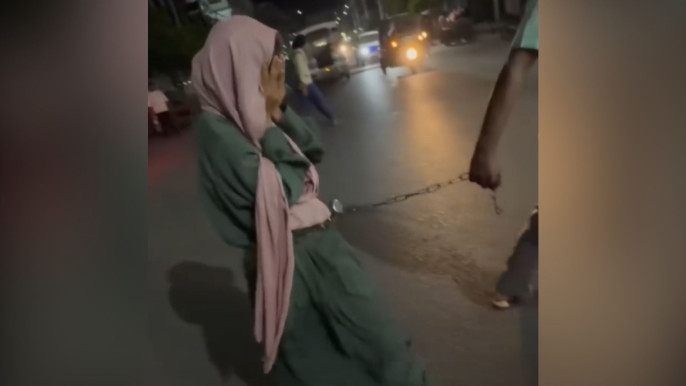
Bdbusinessdaily.com – A video from Sylhet showing a 16-year-old girl being pulled along a road with a chain fastened around her waist has renewed attention on the limits of public action when someone is suspected of a crime. The footage, lasting 36 seconds and circulating online on 8 September, shows the girl crying while a young man drags her through the street.
She had been held by local people after an allegation that she attempted to take money from a shop’s cash box at about 7pm on 7 September. The allegation itself may require investigation, but it does not settle guilt. Nor does it permit a crowd or private individuals to beat, chain, humiliate or otherwise punish the accused person.
The central legal question is not whether residents can ever intervene when they believe an offence has occurred. In narrowly defined situations, they can. The decisive issue is what must happen next: the person must be transferred promptly to lawful authorities, rather than being subjected to punishment in public.
When can a private person detain someone?
Section 59 of the Code of Criminal Procedure permits a private individual to arrest a person seen committing a non-bailable, cognisable offence, as well as someone who has been declared a proclaimed offender. That authority is limited. It is not a licence to run an unofficial detention process or to decide the accused person’s fate.
After such an arrest, the suspect must be handed to police without unnecessary delay. If an officer is not available, the law requires that the person be taken, or arrangements made to take them, to the nearest police station.
“There is a difference between detaining someone and handing them over to police and punishing someone because you believe they have committed a crime,” said Supreme Court lawyer Sudipta Arjun.
Arjun said the provision does not grant ordinary citizens continuing custody over a suspect. Even where the first act of restraint might fall within the law, subsequent conduct can still be unlawful.
“If someone instead punishes the person they have detained, including by chaining them around the waist and making them walk in public or subjecting them to physical or mental abuse, such conduct is against the law and punishable,” he added.
Constitutional protections apply to every accused person
Bangladesh’s Constitution provides safeguards that remain relevant even when a person is accused of wrongdoing. Article 31 protects the right to legal protection. Article 32 addresses life and personal liberty. Article 35(5) bars torture and cruel, inhuman or degrading treatment or punishment.
Those guarantees are directly engaged when a person is assaulted, restrained with a chain, paraded in public or subjected to humiliation. The justice system, not a gathering of bystanders, is responsible for examining evidence, deciding responsibility and imposing any lawful penalty.
“The law also presumes a person to be innocent until proven guilty. So, even if someone is accused of an offence, they cannot be punished by individuals or a group without due legal process,” said Supreme Court Advocate Barrister Faran Md Araf.
This principle matters in emotionally charged situations. A theft allegation can provoke anger, especially among people who feel they have witnessed an offence. But anger does not replace an investigation, and a recorded accusation does not become a verdict because it spreads through a neighbourhood or across social media.
Possible offences arising from unlawful confinement
Holding a person can itself create criminal liability when the restraint goes beyond the law’s narrow allowance. Section 342 of the Penal Code makes wrongful confinement an offence. A conviction may carry imprisonment for up to one year, a fine of up to Tk 1,000, or both. Section 341 separately addresses wrongful restraint.
The difference is significant for investigators examining the Sylhet incident. They will need to determine the sequence of events following the girl’s detention, identify everyone involved and establish the period for which she was kept under control.
Chaining and dragging a person publicly raise concerns beyond merely preventing them from leaving. Araf said unlawful detention, assault, public shaming and the use of restraints can breach domestic protections as well as internationally recognised human-rights standards.
“Investigation, determination of guilt and punishment are functions of competent state authorities and courts,” he said.
Why the girl’s age adds another layer of concern
The girl in the Sylhet footage is 16, making her a minor. Children accused of offences are entitled to protections that recognise their age and vulnerability. Whatever allegation is made against a child, the governing principle remains unchanged: an accusation is not proof, and it does not transfer the power to punish to members of the public.
The incident also highlights the particular harm caused by public exposure. A child who is restrained and humiliated before a crowd may face consequences that extend well beyond the immediate event. Legal protections for minors are meant to prevent treatment that treats a young person as already guilty before any proper process has occurred.
A wider pattern of public violence against minors
The Sylhet episode follows other cases in which minors have faced public violence over alleged or perceived misconduct. In May, two minor girls were beaten with a belt on a launch at Munshiganj Launch Terminal after people became angry about their clothing. Video footage showed a young man striking them while dozens watched, filmed and cheered.
The man, Nehal Ahmed Jihad, said he had acted to “discipline” the girls as an elder brother and claimed he was attempting to stop a larger assault. The facts and alleged conduct differed from the Sylhet case, but both incidents expose the same dangerous assumption: that a private person may decide another person deserves immediate punishment.
Limited powers to make a private arrest do exist under the law. They are designed to help secure a suspect for transfer to police, not to create an alternative system of justice. The line is clear: restraint must be temporary, necessary and followed by prompt handover to authorities. Beating, chaining, dragging and public humiliation cross that line.
For the girl in Sylhet, any allegation of attempted theft must be addressed through a lawful investigation. For those who detained and allegedly mistreated her, the same legal system must examine whether their actions violated protections intended to apply to every person, including those accused of crime.
Related Reading
Frequently Asked Questions
What is She was accused of theft Did that?
She was accused of theft Did that is the main topic of this guide. The article explains the context, practical details, and next steps readers should understand.
Why does She was accused of theft Did that matter?
She was accused of theft Did that matters because readers are looking for a useful answer, not just a short summary. Good content should match search intent and help them decide what to do next.