Bangladesh Charts Aggressive Renewable Energy Course Ahead of 2030 Deadline
Bdbusinessdaily.com – Bangladesh’s parliament heard a sweeping outline of the country’s clean-power ambitions on 8 September, when State Minister for Power, Energy and Mineral Resources Aninda Islam Amit laid out a roadmap that would shift at least one-fifth of national electricity generation onto renewable sources within the next decade. The announcement, delivered in response to a parliamentary notice on urgent public importance tabled by reserved-seat MP Helen Jerin Khan, signals a decisive pivot away from fossil-fuel dependence at a moment when projected demand is set to climb sharply.
Demand Outlook and the Case for Diversification
Amit cautioned that if the present trajectory of economic expansion and industrialisation holds, total electricity demand could swell to between 24,000 and 25,000 megawatts by 2030. Meeting that growth with imported fuels alone would deepen trade deficits and expose the economy to volatile global energy prices. The minister framed the renewable push as a hedge against that vulnerability, arguing that domestically sourced clean power reduces exposure to external supply shocks while supporting long-term industrial competitiveness.
The strategy document underpinning the announcement is titled the “National Renewable Energy Development Strategy 2026-2030.” Its longer-horizon ambition goes further: by 2040, the government envisions that at least 30 percent of all electricity will originate from renewable sources, effectively doubling the near-term share within another decade.
Where the Megawatts Come From
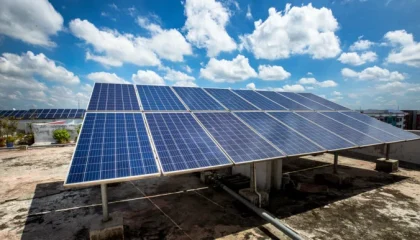
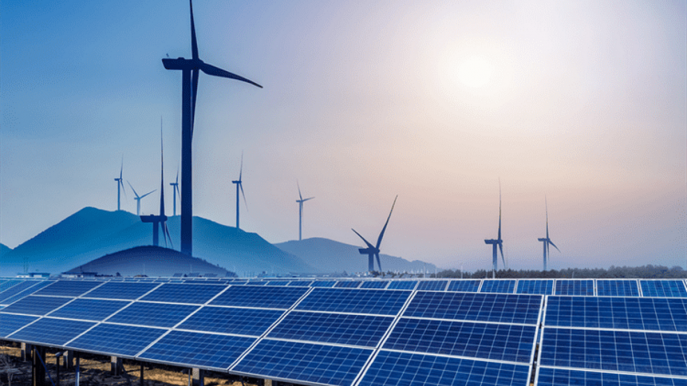
The 2030 target breaks down into distinct technology streams. Rooftop solar installations are projected to deliver roughly 5,500 megawatts, while large-scale ground-mounted solar farms are expected to add another 4,500 megawatts. A residual band of 450 to 550 megawatts is allocated to a mix of wind, waste-to-energy, small hydropower, floating solar, and agrivoltaic systems — technologies that exploit otherwise idle surfaces or by-products of other economic activity.
Together these streams would supply the minimum 20 percent share of total generation that the government has committed to. The emphasis on distributed rooftop generation reflects both the scarcity of contiguous open land suitable for utility-scale plants and the desire to decentralise supply, reducing transmission losses and grid congestion.
Land, Investment, and Public-Private Partnership
Land availability has long been a bottleneck for utility-scale solar in Bangladesh. Amit disclosed that approximately 60,000 acres of unused government land have been catalogued nationwide. Following a review process, roughly 30,000 acres have been earmarked specifically for solar development. Allocation to private investors will be channelled through the Bangladesh Investment Development Authority under public-private partnership frameworks, giving developers a single institutional gateway for site access, permitting, and offtake arrangements.
Policy Levers: Tax Relief, Grid Access, and Financing
To compress the capital cost of solar projects, the government has slashed the import duty on photovoltaic panels, inverters, batteries, and associated equipment to a nominal one percent. Commercial importers additionally benefit from a six-month blanket exemption covering customs duty, regulatory duty, supplementary duty, value-added tax, advance tax, and advance income tax — a package designed to accelerate component availability during the initial build-out phase.
On the demand side of the equation, surplus electricity generated by small-scale solar systems can now be exported to the national grid. The state purchases each unit at Tk 10.50, creating a guaranteed revenue floor that lowers investment risk for household and small-commercial adopters.
The minister also flagged ongoing negotiations with Bangladesh Bank and multilateral development partners to structure financing on concessional terms for small solar projects. Parallel discussions with investors address wheeling charges and cross-subsidy charges applicable to large renewable installations, ensuring that grid-connection economics do not become a hidden barrier.
Project-Level Decisions: Rampal, Matarbari, and Feni
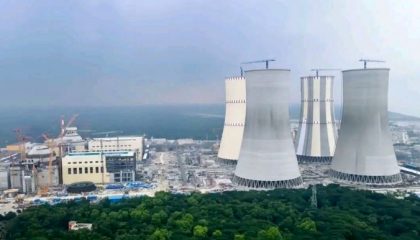
Two concrete site decisions illustrate the policy shift in practice. At the Rampal coal power station in Satkhira, a planned second coal-fired unit has been replaced — on the Prime Minister’s advice — with a 460-megawatt solar project, citing environmental sensitivities around the Sundarbans mangrove ecosystem and the livelihoods of adjacent fishing and farming communities. Similarly, a 70-megawatt solar installation is being sited on unused ash-pond land at the Matarbari coal power project, converting a waste-management liability into a productive energy asset.
Closer to home, rooftop solar panels are being fitted across 23 buildings of the Local Government Division in Feni district. The installation is slated for inauguration during the Prime Minister’s visit to the district on 17 September, serving as a visible demonstration of the programme’s reach into administrative infrastructure.
Entrepreneurship, Youth, and the Regulatory Stack
Amit positioned small-scale solar not merely as an energy solution but as an engine of new entrepreneurship, particularly for young Bangladeshis seeking self-employment in installation, maintenance, and local distribution. The government’s stated intent is to cultivate a domestic ecosystem of solar technicians and micro-enterprises rather than relying solely on imported turnkey projects.
The regulatory architecture supporting this transition has been consolidated recently. The Renewable Energy Policy 2025, the Net Metering Guidelines 2025, and the National Rooftop Solar Programme 2025 collectively define eligibility, metering, compensation, and procurement rules that investors and households can now navigate with greater predictability.
“The government sees small solar projects as a source of new entrepreneurship, particularly for youth,” the state minister told parliament, adding that financing discussions with Bangladesh Bank and development partners aim to put easy-terms capital within reach of aspiring solar entrepreneurs.
For a country whose energy mix has historically leaned heavily on imported natural gas and coal, the 2030 milestone represents both a technical and a political commitment. Whether the land allocations, tax incentives, and grid-connection reforms translate into actual megawatts on the meter will depend on execution speed over the next five years — a period in which the gap between policy intent and installed capacity will either narrow or widen, with consequences for energy security, climate obligations, and household electricity bills alike.
Related Reading
Frequently Asked Questions
What is Govt targets 20 of electricity?
Govt targets 20 of electricity is the main topic of this guide. The article explains the context, practical details, and next steps readers should understand.
Why does Govt targets 20 of electricity matter?
Govt targets 20 of electricity matters because readers are looking for a useful answer, not just a short summary. Good content should match search intent and help them decide what to do next.